Saturday, November 28, 2009

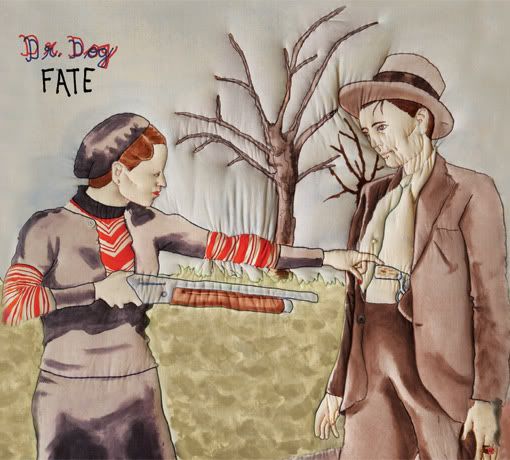
Dr. Dog's FATE


Philadelphia natives (and yes, I have seen them live), Dr. Dog have slowly and steadily been making a reputation with mellow, lo-fi "indie" rock for years. Well, it might be labeled as indie rock but that's just because it's too complicated to say they're psychedelic blues rock meets classic '60's pop. "The Breeze" isn't the most overwhelming album opener, but it sets the mellow tone the album will maintain and uses some interesting flute instrumentation near the end. "Hang On" introduces the bluesy tone and smattering of country which will dominate the album, including some well-placed harmonica work and gospel vocals. It also sports some of the best content lyrically: "and what you thought was a hurricane was just the rustling of the wind/why do you think we need amazing grace just to tell it like it is?/ oh I don't need no doctor to tear me all apart/I just need you to mend my heart."

"Old Days" is another album highlight, with snare drums layered over by far-off vocals, shakers, and other strange percussion, supplemented by a piano hook in a fuzzy psychedlic folk fusion. It's astounding how much they achieve without traditional instrumentation. "Army of Ancients" is for the true blues-lover tinged with some NRBQ-esque jazz. "The Rabbit, the Bat, and the Reindeer" is the catchiest song on the album, a piece of excellent piano-driven druggie pop, while "The Ark" is a close second and the darkest song on the album in tone. It opens with mean, driving guitars which demand your attention, and again that military snare; the lyrics are also some of the best of the album: "God, he called for rain/so I built an ark but no rain came/I was ashamed...Love, she asked for more/but what I gave only made her poor." This is the only real rock on the album, but it shines beautifully and it's much rawer than the other tracks.

"From" is a relaxed, trippy love ballad, appreciable for its slow build and rooted in folklore lyrics. Lyrically the album is superior as it strays from the beaten path to express love and friendship in unconventional ways, works with random images like trains and trees, and delves into folklore, large thematic concepts, and even biblical references. This strength is particularly evident in "100 Years," which explores mortality and slavery in a tall tale manner: "About 100 years from now I'm going to marry you out of common sense/and get out from behind this plow."

"Uncovering the Old" is a solid album contribution, but not particularly remarkable compared to earlier tracks. "The Beach" comes closest to the sharp guitars and attitude of "The [brilliant] Ark," and sports the lyrics from which came the album title. Album closer "My Friend" cleverly weaves together the whole album, starting with a country-tinged opener and using themes from all the songs, or refering lyrics from the other tracks. It ends perfectly with the sound of a train pulling away. This is an album which took a while to grow on me, but it will stay with me the rest of my life. Highly recommended for all ages.

-elln


Duplicity


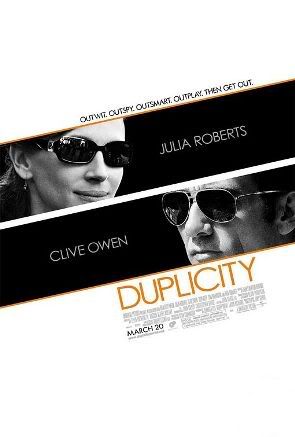
Famed director Tony Gilroy's latest effort, Duplicity, is a mixed bag. Clive Owen is Ray and Julia Roberts is Clare, and they are MI6 and CIA agents respectively. After two one-night stands they team up to extract themselves from their agencies and go private, intent on swindling both sides out of millions of dollars to set themselves up for the rest of their lives. So they sign on with a private corporate group intent on stealing the formula to a rival's new product--but the question is who is playing who?

The main draw of this film is how paranoid it makes you. Really. When the two leads constantly question each other, nervous that the other will take off with all the funds, the audience is constantly running through the maze wondering who is on whose side. The slick filming and direction may set the tone for this quirky, offbeat spy movie, but the plot gets a bit too convoluted to follow, and lacks a big reveal which should be a payoff for the audience. It's still engaging, however, as is the dialogue between the two leads--or what little there is of it--minus the one embarrassingly mushy love confession. Most of their relationship is sexual, but since it's a spy movie, whatever.

The film does suffer, at times, from info-dumping, which doesn't come off quite as eloquently as it did, in, say, something like Oceans 11. As Dick's team explained all their intricate little spy tricks to him I was rolling my eyes.

The callousness and scheming of corporate america is totally trashed here (I approve!), and Paul Giamatti is brilliant in his portrayal of egotistic, maniacal corporate executive Dick Garsik. In fact most of the cast is stellar. The movie has a notably good soundtrack, with a lot of Spanish-sounding tracks to empahsize the sexiness of it all. The characters themselves might not be particularly complex, the plot might be too complicated at times, but the fun is all in navigating the labyrinth of who is using who, and the heart-pumping action is thrilling. Even if the ending was a bit lackluster, I enjoyed the very last scene immensely, and was glad to have good old Clare and Ray back from their hiatus as fast-talking spies instead of people-who-make-really-trite-and-hackneyed-love-speeches.

-elln

Audrey Niffenegger's THE TIME TRAVELER'S WIFE


Okay, I'm off hiatus and back to reviewing.

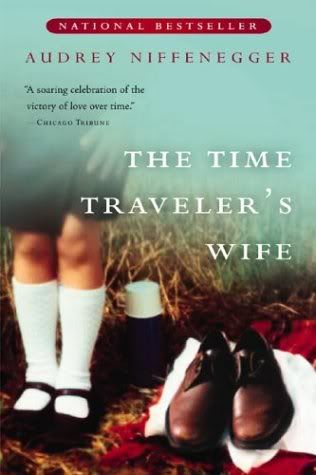
If you'll recall I went to see the movie when it came out a few months ago, so I decided to read the book that's made such a splash. First, the concept is a clever one. Henry DeTamble is afflicted by a genetic disorder which causes him to time travel spontaneously. This isn't some magical gift, but rather a curse which plagues his life, causing him to end up in dangerous situations and to learn things about the future he would never normally know.
His wife, Clare, has known him since she was six years old because an older version of Henry traveled to the past to see her. Meanwhile, Henry meets Clare for the first time in his own timeline when he is twenty-eight. Thus begins their harrowing love story.

And this is a love story, a good one. Told in present tense, first-person narrative, it tries to get as close to the reader as can be. The sentences are direct, simple, and cutting; the characters are complex. Niffenegger's strength seems to be her unrelenting brutal and harsh portrayal of the realities of life. Even though her premise is fantastical, an ability which we would at first glance believe a blessing, she treats with eagle eye precision as an almost life-threatening illness. Clare and Henry are so in love, yet face so many troubles. Of course the title is revealing; this isn't about a woman coming into her own (a woman who is already fiercely independent), but rather about a steadfast love. By making Clare a possession of Henry in the title, Niffenegger has already relegated her to that "waiting" position she maintains throughout the book.

Despite its realistic and complex look at a single relationship, the book does have its faults. Chief among these is its diminished emotional impact. Sure, at the end I did feel that a some great saga had come to an end, but I wasn't exactly teary-eyed. This is mostly because Clare and Henry are unapologetically selfish characters. They mourn their plight, they both injure other lovers unrepentantly, they decide that they need one another despite the consequences. Perhaps these are realistic human traits-but there isn't much to ingratiate you to either character, both of whom seem to run around in circles throughout the book even as their relationship with one another changes.

The book has plenty of strengths. Its length may have been excessive, but Niffeneger pulls off the intersecting, jumping timeline structure quite well. She uses it for shocking revelations late in the book and a few excellent plot twists. And secondary to the romance of Clare and Henry is an exploration of family. Clare's family, with its dysfunctionality swept neatly under the rug and surfacing during high-tension family affairs with the aid of inebriation, rings painfully true. Developments in the Ingrid and Henry storyline, mirrored by the Gomez and Clare storyline, are a treat for the reader and often provide more insight into the two protagonists than many of their own interactions do. This is a mature and cathartic read, and it succeeds in being epic even if it does fail to rake us across the coals in an emotional sense.

-elln

Friday, November 20, 2009

New Moon (movie)


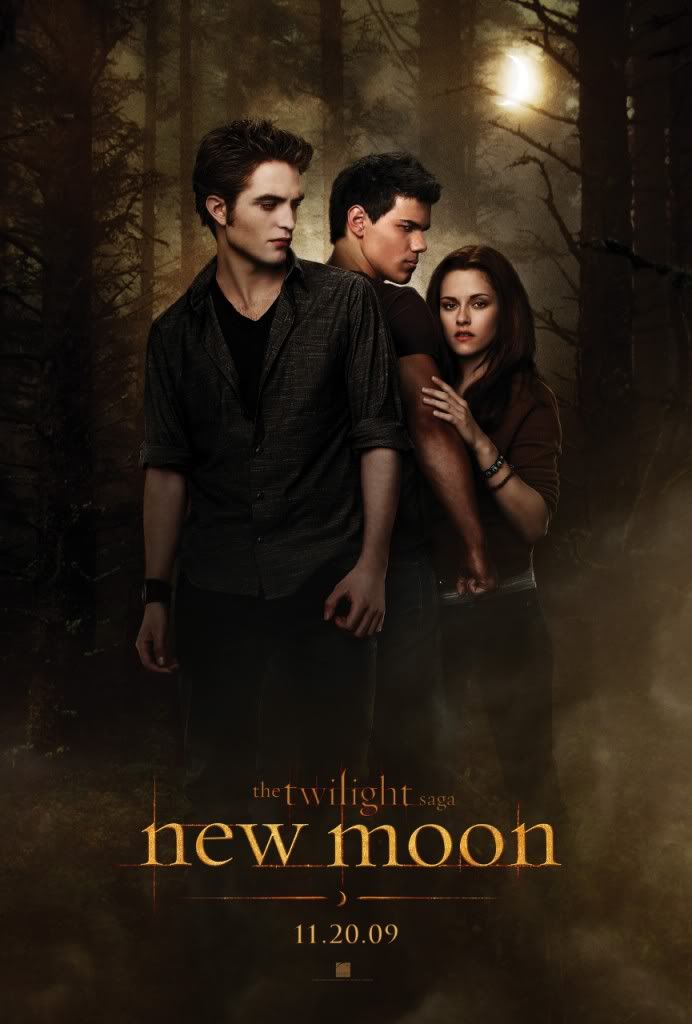
An adaptation of the second installment in Stephanie Meyer's Twilight saga, New Moon is definitely an improvement over the first film. In fact, it's an improvement over the book as well. Why? A couple reasons, including the fact that the plot contrivances are far less obvious in the movies.

The basic idea is that Bella Swan (Kristen Stewart) and Edward Cullen (Robert Pattinson) are In Love except that Edward is torn between loving Bella and wanting to suck her blood, seeing that he's a vampire and all. Too bad in the first movie Edward had as much character as a piece of cardboard, especially in the scenes when he isn't staring at Bella completely freaked out.

New Moon itself is a faithful adaptation of the novel, so most of its plot and character problems come from the books themselves. The movie is a solid piece of entertainment, blending tortured romance with slice-of-life with action and supernatural elements--throw in some dark and deadpan humor and you've got it made. The soundtrack is good, the direction is excellent (except for the plethora of close-up face shots which made me feel like the characters were breathing on me), and the art direction is luscious. Watching all those wonderfully dark, beautiful characters on screen is a treat. But the strength of New Moon versus Twilight comes in the absence of one of Twilight's leads and the insertion of secondary character Jacob (Taylor Lautner) as the third side of the love triangle.

What Twilight failed to realize is that (especially aimed at a female audience) lack of dialogue between the two mains leads CANNOT be made up with by pans of Edward and Bella lying in fields, holding hands, and climbing trees. There is no replacement for good dialogue, and it was missing in Twilight. As a result, Edward became inaccessible to the viewer. Not so the case with Jacob. New Moon's script is ten times better than Twilight's and allows for light-hearted and more serious banter between Jacob and Bella; Jacob is a lovable hunk of muscle and a stark contrast to Edward. So in terms of character development New Moon is vastly more satisfying than the first installment of the series.

The only notable disappointment between first and second movie is the lack of screen time for the Cullen clan, a cast of characters who are almost as fun to watch as Edward is dull. And there were a couple poor directing decisions, such as the ridiculous scene where Jacob fumbles around with a motor bike instead of rushing to wounded Bella, and then takes off his shirt to wipe her small head wound. Tell me they weren't thinking about the teenage audience. Also look out for Dakota Fanning all grown-up and playing sadistic vampiress Jane, a high-ranking member of the Volturi.

Plot has never been a problem in the saga, although when examined with a critical eye all the contrivances become apparent. Case in point: Bella's one friend, once Edward leaves, just happens to turn into a werewolf. In movie form, however, it's easier to dismiss these contrivances because of the flair and suspense with which the film is directed. On a personal note, I'm starting to wish Stephanie Meyer had just left the whole werewolf subplot out of it. Vampire politics are fascinating, at least in the movies, in and of themselves; and Jacob as a normal human provided a much more interesting dilemma for Bella. It would crystallize her problem--a happy, mortal life with Jacob, or an immortal and happy life with Edward? It seems like the question would have a simple answer, but immortality messes with the natural order of things, the soul, etc. This dilemma is much more substantial and interesting than the whole werewolves vs. vampires subplot.

As a whole the movie is better than both its book counterpart and the first installment of the series, mostly due to an improved script and a lovable third side of the love triangle.

-elln

Monday, October 19, 2009

Zombieland


Yet another movie about Zombies, right? WRONG. Everything about this movie should have gone down the wrong way with me: I hate horror, I'm not a huge fan of gratuitous gore, and I'm not especially fond of the undead. But given the cast of tastefully-known but not big name actors, I was curious to see where this movie went.

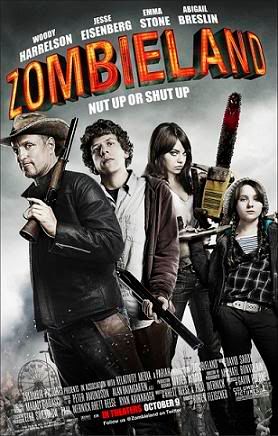
A movie from director Ruben Fleischer, Zombieland’s premise isn’t exactly original. Most of the world has been stricken by a virus transmitted via biting, and it turns people into zombies, or rabid cannibals with little capacity for reasoning. Columbus (Jesse Eisenberg, Adventureland) is one of the few survivors, due mainly to following an anal-retentive list of rules he never breaks (#1 Cardio, #2 Beware Bathrooms, etc). Trying to make it home to Ohio, he teams up with outlaw zombie-slayer killing machine Tallahassee (Woody Harrelson, No Country for Old Men), and eventually Wichita (Emma Stone, Superbad) and Little Rock (Abigail Breslin, Little Miss Sunshine).

But the clichéd premise doesn’t matter because the execution is brilliant. First things first, Zombieland is hysterical. It certainly knows how to use its grossness for ick-factor moments, but most of the comedy comes from the characters themselves. The cast is a pleasantly star-studded but off the radar group, and the acting is top-notch, with Harrelson stealing the show as lunatic Tallahassee. The comedy is disgusting at times, and appropriately morbid, but never misses the mark; there are even throwbacks to Deliverance and Ghost Busters.

At the same time, there are moments of genuine suspense in the vein of an action film as opposed to a horror film. A heart-thumping confrontation near the film’s conclusion involving heavy weaponry on a roller coaster is possibly one of the craziest shoot-outs ever directed. There are also genuinely heart-warming moments in the film, although towards the end of the film the sap is played up a little too much. The soundtrack is for lovers of indie and classic rock, sporting songs by Sea Wolf, Band of Horses, and Blue Oyster Cult.

The characters are all genuinely likable people and sufficient time is spent on their respective back stories. All around the movie’s a winning combination with a good mix of humor, action, and character development, topped off by stellar direction, cinematography, and clever script-writing. If you can get past the gross factor (or maybe you enjoy it) there’s a genuinely entertaining story here. So yeah, it's all been done before--but rarely this outrageously or awesomely.
-elln

Monday, October 5, 2009

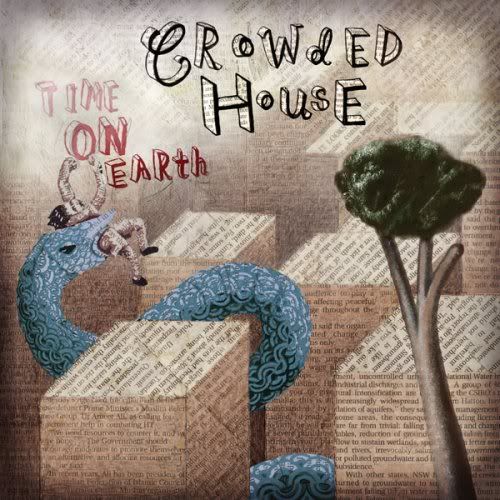
Crowded House's TIME ON EARTH


Power Aussie rockers Crowded House haven't produced anything this good since their streak in the eighties. Time on Earth is a moving piece of work, helped by guests like the incredibly talented, prolific Johnny Marr (fan!) and the Dixie Chicks (not a fan). And it's an album largely haunted by drummer Paul Hester's suicide.

The album's tone is set by the floating, slow, dreamy opener of "Nobody Wants To." Neil Finn's voice is crooning, and while the song is tinged with country it's well-crafted lo-fi rock. Their sound has certainly gotten smoother, slower, and has done away with the new wave/glam tinge altogether. "Don't Stop Now" is simply a continuation of the sleek rock of the album opener, with a sufficiently-built chorus and Finn's distant but simple and piercing vocals. "She Called Up" is the album's first upbeat offering, and it's catchy but not really my style as its country influence is a bit too obvious. The bridge is definitely funky, calling to mind the disjointed chords of bands like Silverchair, but I wouldn't call this an album highlight.

"Say That Again" is another solid offering of melancholy Sunday-morning rock, like a less brash, more sophisticated Goo Goo Dolls. This haunting piece is probably the album's strongest point until the next track, "Pour Le Monde," in which Finn really capitalizes on the piano that was hinted at in the opening track. This piano-driven piece highlights Finn's basic but poetic and touching skill with lyrics, and while the orchestrated backing is this close to being sappy the piece is crafted well enough to avoid that pitfall.

"Even a Child"is Marr's contribution to the album and begins the string of really strong tracks. Integral is Marr's catchy guitar-work; here the country twinge works. "Heaven That I'm Making"is more experimental than prior album songs and isn't the strongest effort on the album; "A Sigh" is a Doves-like lush effort backed by tremoring violins and well-placed orchestral arrangements. "Silent House" (surprisingly co-written by the Dixie Chicks) is an album highlight with a smart buildup to the payoff of a melancholy, gorgeous reflection on a dead friend. Finn even inserts small bagpipe sections, demonstrating that while he knows how to play it safe, he steps outside the box enough to prove his musicianship.

"English Trees" is another album highlight, harking back to the earlier smooth rock at the album's start but even more mellowed out. "Walked Her Way Down" is the jazziest track on the album, with extra points for singable-alongable-ness, while "Transit Lounge" can veritably be called clever in both execution and subject matter, with its self-deprecation and frankness and layering of snippets of language and a nice performance by a female vocalist.

"You Are the One to Make Me Cry" seems to realize that the album is winding down, and builds an air of nostalgia using, once again, violin. Once again, one of the impressive aspects of Finn's work is how easily he incorporates a variety of instruments into his arrangements with ease so that they're effective but unobtrusive. "People Are Like Suns" is almost Keane-ish, with a slow and lovely piano arrangement and haunting, melancholy vocals (which the whole album is shot through with). This is what a good rock album should sound like; it avoids all the cliched pitfalls of the genre. Time on Earth is solid, thought-provoking, simplistic and lovely through-and-through.

-elln

Sunday, October 4, 2009

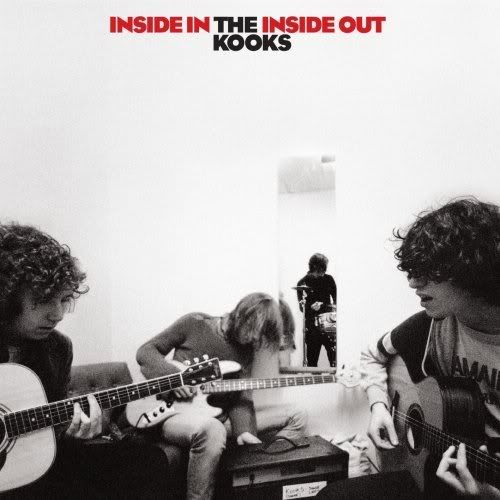
The Kooks' INSIDE IN/INSIDE OUT


It's ironic that the Kooks took their name from a David Bowie song considering how little they have in common with glam rock aside from occasional yowling vocals. No, these English indie rockers have a unique spin on the acoustic and alternative scene which renders their sound distinguishable from the beginning. Inside In/Inside Out is a gem of a first album, and starts out unconventionally with one of the catchiest and lo-fi tunes on the album, "Seaside." A soulful acoustic piece, "Seaside" lasts one minute and forty seconds, and is followed by the song one would think would be the opener, "See the World." The second track is when we first hear the upbeat, buzzy, piercing guitars which are the Kooks' signature from here on out, and while it's not the strongest song on the album, it's a solid start.
"Sofa Song" was released as a single before the album, and sports Luke Pritchard singing in a lower register than we've heard yet before launching into more yowling--albeit controlled yowling. What makes the Kooks so interesting is their raw garage-rock style smoothed over and polished into cystallized indie rock and tight chords. "Sofa Song" starts a slew of singles, and next up is the short and sweet "Eddie's Gun," highlighting the masterful use of harmony which is another Kooks trademark.
"Ooh La" is an album highlight where the Kooks back off on the unrelenting suniness of previous tracks and melancholy pervades this still-catchy, still-commercial song. It's not like the Kooks' subject matter is original, but the way it's written is brilliant enough and relatable enough that, sticking to their style, they really can't go wrong.
There's not much to say about "You Don't Love Me" other than that it's another solid, if not particularly strong, addition to the album. "She Moves in Her Own Way," however, is a nice relief from power-driven guitar hooks and lets the listener breathe at the perfect time with its laid-back approach to a loving relationship and lazy, sunny days.
"Matchbox" marks a lyrical change in the album to the more sophisticated, and shifts musical themes pleasurably, becoming one of the surprise album highlights, especially the catchy refrain. "Naive" is yet another album highlight in the vein of the slightly less raw, more polished second half of the album, while "I Want You Back" returns to direct, less-pleasing lyrics and misses a catchy hook by a hair's breadth. "If Only" is a punk take on alt-rock, short with simple guitar chords but a surprisingly upbeat chorus; "Jackie Big Tits" is a testament to the band's immaturity. The song itself is good, and is a return to the mellow sound of some early tracks, in particular "She Moves"; however, the title (and chorus) is unfortunate and prevents the song from being taken seriously.
"Time Awaits" opens with a markedly bluesy acoustic guitar before launching into traditional Kooks sound--at this point what the album lacks markedly is greater variety in sound; on the other hand, the Kooks have such an enigmatic sound going that the begged question is whether or not experimentation will deliver for fans on following albums. The Kooks end their album quietly, just as they began it. "Got No Love" is as close as the Kooks get to reflective, and it works. For such a fiery first album, the choice to open and close with melancholy tracks is interesting, but it does offer a sense of closure.
-elln