Showing posts with label movie review. Show all posts

Saturday, January 2, 2010

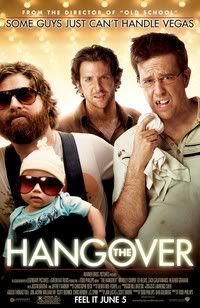
The Hangover


It was recently New Years so this seems appropriate fodder. So let's talk about the highest grossing R-rated comedy ever. And what makes it so funny.

Todd Phillips hasn't really produced anything this, well, sophisticated before. Odd word choice, and yeah it's a comedy and it can be gross but it never dips to the gratuitously disgusting levels of something like Superbad. In fact, most of the humor comes from the absurd situations our beloved characters find themselves in.

On a trip to Vegas to celebrate Doug's (Justin Bartha) last nights as a free man, he and his buddies Phil (Bradley Cooper), Alan (Zach Galifianakis), and Stu (Ed Helms) are accidentally roofied and can't remember the entire night. They wake up in the hotel villa with a tiger, a chicken, a baby, a missing tooth, and a missing Doug. Desperate to find Doug, the three remaining men try to piece together the night before to save Doug's wedding and their own butts.

A film like this has to succeed on the performances of its leads, and The Hangover does just that. Bradley Cooper thrives in asshole roles (see Wedding Crashers) and pulls off fast talker, narcissistic Phil perfectly. Stu is the goody-two-shoes, owned-by-his-girlfriend, nerdy but successful dentist who usually picks up the tab. And then there's Alan...oh, Alan. Invited because he's the bride's brother, Alan is the perfect example of one of those guys in real life who don't have anything wrong with them that you can pinpoint, like Asperger's, but who continually make socially awkward, ignorant, or stupid comments that either make you laugh in disbelief or shy away from them while trying to mask your expression of horror at the same time. They say things like, "I didn't know they gave out rings at the Holocaust!", one of Alan's best lines, with complete and honest surprise. Sounds like a certain Belushi we all know and love.

The characterizations are refreshing in that we know these stereotypes, but they're downplayed and believable here. The acting is top-notch, as is the writing as the absurdities continue piling one on top of the other. The humor ranges from slapstick to jawdropping to situational irony, and yet somehow it all feels real. It feels like these guys could actually steal Mike Tyson's tiger, and actually get tazed for fun in a police station, and actually drive a cop car around illegally.

This is, of course, a certain brand of humor. Not everyone will find the humor base enough, or mainstream enough; it's a bit offbeat and quirky at times, especially some of Alan's creepier moments. This isn't stupid comedy, and the dialogue is smarter-than-average. Even if the premise sounds tried and tired--four guys go to Vegas for a wild night--it's so well-executed that it definitely had me cracking up. The only way you'll know, though, is to try it for yourself.

I do have to comment on the weakness of the soundtrack. A couple of the hip-hop/rap songs may have suited the tone of the movie, but they were way too noticeable and completely overtook some scenes instead of supporting them.

Verdict: While the premise may sound cliched, this is one of the funniest comedies of 2009 (and perhaps the decade), and certainly the most well-written.

-elln

Monday, November 30, 2009

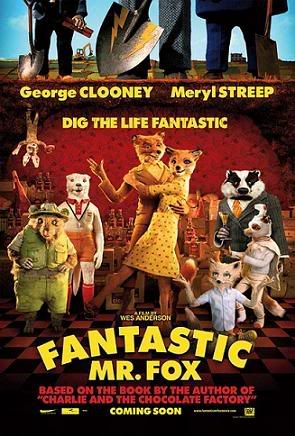
Fantastic Mr. Fox (Film)


Based on the book by Roahld Dahl, Fantastic Mr. Fox is Wes Anderson's first foray into animation--and what a beatific foray it is. Using painstaking stop motion animation and breathtaking dioramas, Anderson has brought Dahl's quirky and colorful landscape to life.

Mr. Fox is the most successful thief around until he hangs up his criminal hat to get married. But when Mr. and Mrs. Fox move house, Mr. Fox is tempted to a life of crime once again by the proximity of the meanest and richest farmers in the county--Boggis, Bunce, and Bean. Mr. Fox starts stealing again, but once the farmers find out war ensues.

This could easily be simply a children's film, but the beauty is that it isn't just that. While kids are sure to enjoy it, it works on all levels. It's one of those rare, off-beat, delightful films which offers something for everyone. Anderson never loses sight of the fact that he's adapting a children's story which allows latitude for silly and fun elements; nor does he let goofiness override the smart dialogue or direction. Crucial to the success of the film is the humor, which includes slapstick and physical humor, as well as sarcasm and deadpan one-liners. It's never over the top and never amiss.

The visual style is scruffy and endearing, and where would it be without an excellent cast? George Clooney is stellar as Mr. Fox, as is Meryl Streep as Mrs. Fox. The highlight performance, though, is Jason Schwartzman as Mr. and Mrs. Fox's son, a disaffected cape-wearing youth cub. other performances are solid and appropriate for such a charming cast of side characters. The music is a spare country soundtrack which completes the film.

All in all this is a splendid, unconventional treat and showcases Anderson's greatest abilities yet.

-elln

Saturday, November 28, 2009

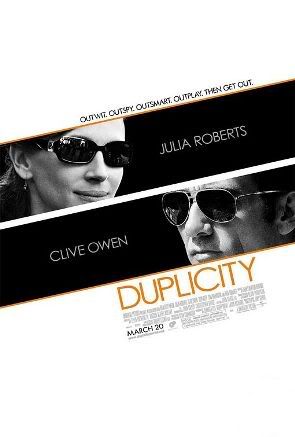
Duplicity


Famed director Tony Gilroy's latest effort, Duplicity, is a mixed bag. Clive Owen is Ray and Julia Roberts is Clare, and they are MI6 and CIA agents respectively. After two one-night stands they team up to extract themselves from their agencies and go private, intent on swindling both sides out of millions of dollars to set themselves up for the rest of their lives. So they sign on with a private corporate group intent on stealing the formula to a rival's new product--but the question is who is playing who?

The main draw of this film is how paranoid it makes you. Really. When the two leads constantly question each other, nervous that the other will take off with all the funds, the audience is constantly running through the maze wondering who is on whose side. The slick filming and direction may set the tone for this quirky, offbeat spy movie, but the plot gets a bit too convoluted to follow, and lacks a big reveal which should be a payoff for the audience. It's still engaging, however, as is the dialogue between the two leads--or what little there is of it--minus the one embarrassingly mushy love confession. Most of their relationship is sexual, but since it's a spy movie, whatever.

The film does suffer, at times, from info-dumping, which doesn't come off quite as eloquently as it did, in, say, something like Oceans 11. As Dick's team explained all their intricate little spy tricks to him I was rolling my eyes.

The callousness and scheming of corporate america is totally trashed here (I approve!), and Paul Giamatti is brilliant in his portrayal of egotistic, maniacal corporate executive Dick Garsik. In fact most of the cast is stellar. The movie has a notably good soundtrack, with a lot of Spanish-sounding tracks to empahsize the sexiness of it all. The characters themselves might not be particularly complex, the plot might be too complicated at times, but the fun is all in navigating the labyrinth of who is using who, and the heart-pumping action is thrilling. Even if the ending was a bit lackluster, I enjoyed the very last scene immensely, and was glad to have good old Clare and Ray back from their hiatus as fast-talking spies instead of people-who-make-really-trite-and-hackneyed-love-speeches.

-elln

Friday, November 20, 2009

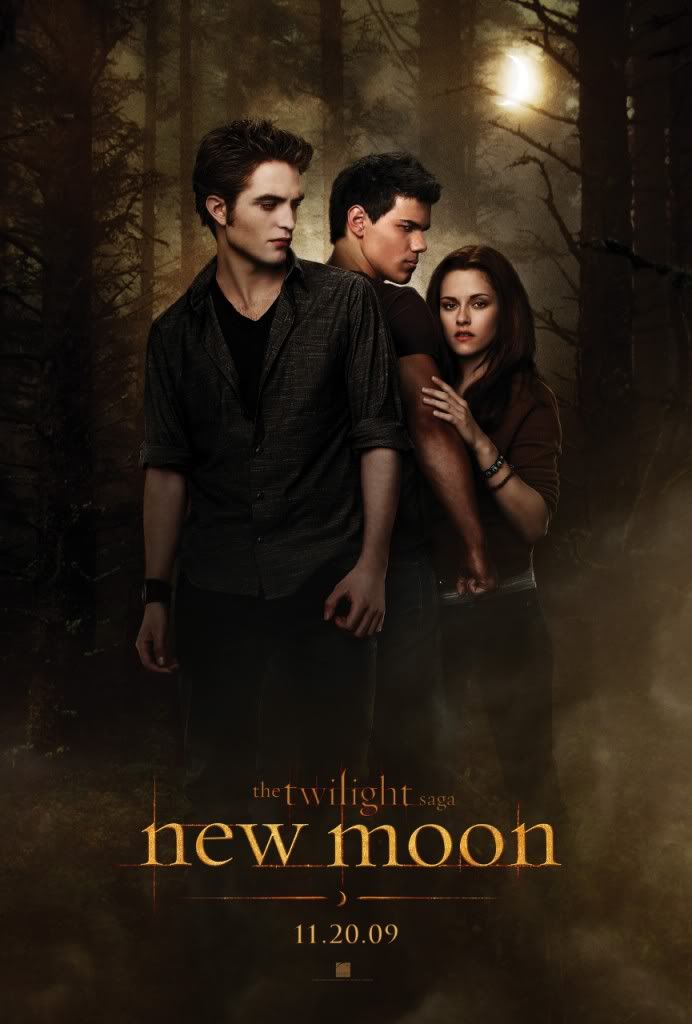
New Moon (movie)


An adaptation of the second installment in Stephanie Meyer's Twilight saga, New Moon is definitely an improvement over the first film. In fact, it's an improvement over the book as well. Why? A couple reasons, including the fact that the plot contrivances are far less obvious in the movies.

The basic idea is that Bella Swan (Kristen Stewart) and Edward Cullen (Robert Pattinson) are In Love except that Edward is torn between loving Bella and wanting to suck her blood, seeing that he's a vampire and all. Too bad in the first movie Edward had as much character as a piece of cardboard, especially in the scenes when he isn't staring at Bella completely freaked out.

New Moon itself is a faithful adaptation of the novel, so most of its plot and character problems come from the books themselves. The movie is a solid piece of entertainment, blending tortured romance with slice-of-life with action and supernatural elements--throw in some dark and deadpan humor and you've got it made. The soundtrack is good, the direction is excellent (except for the plethora of close-up face shots which made me feel like the characters were breathing on me), and the art direction is luscious. Watching all those wonderfully dark, beautiful characters on screen is a treat. But the strength of New Moon versus Twilight comes in the absence of one of Twilight's leads and the insertion of secondary character Jacob (Taylor Lautner) as the third side of the love triangle.

What Twilight failed to realize is that (especially aimed at a female audience) lack of dialogue between the two mains leads CANNOT be made up with by pans of Edward and Bella lying in fields, holding hands, and climbing trees. There is no replacement for good dialogue, and it was missing in Twilight. As a result, Edward became inaccessible to the viewer. Not so the case with Jacob. New Moon's script is ten times better than Twilight's and allows for light-hearted and more serious banter between Jacob and Bella; Jacob is a lovable hunk of muscle and a stark contrast to Edward. So in terms of character development New Moon is vastly more satisfying than the first installment of the series.

The only notable disappointment between first and second movie is the lack of screen time for the Cullen clan, a cast of characters who are almost as fun to watch as Edward is dull. And there were a couple poor directing decisions, such as the ridiculous scene where Jacob fumbles around with a motor bike instead of rushing to wounded Bella, and then takes off his shirt to wipe her small head wound. Tell me they weren't thinking about the teenage audience. Also look out for Dakota Fanning all grown-up and playing sadistic vampiress Jane, a high-ranking member of the Volturi.

Plot has never been a problem in the saga, although when examined with a critical eye all the contrivances become apparent. Case in point: Bella's one friend, once Edward leaves, just happens to turn into a werewolf. In movie form, however, it's easier to dismiss these contrivances because of the flair and suspense with which the film is directed. On a personal note, I'm starting to wish Stephanie Meyer had just left the whole werewolf subplot out of it. Vampire politics are fascinating, at least in the movies, in and of themselves; and Jacob as a normal human provided a much more interesting dilemma for Bella. It would crystallize her problem--a happy, mortal life with Jacob, or an immortal and happy life with Edward? It seems like the question would have a simple answer, but immortality messes with the natural order of things, the soul, etc. This dilemma is much more substantial and interesting than the whole werewolves vs. vampires subplot.

As a whole the movie is better than both its book counterpart and the first installment of the series, mostly due to an improved script and a lovable third side of the love triangle.

-elln

Monday, October 19, 2009

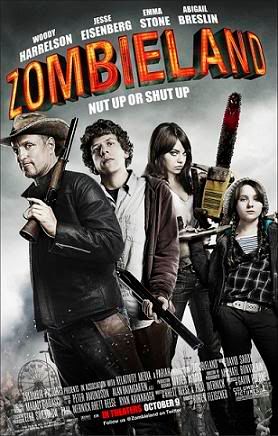
Zombieland


Yet another movie about Zombies, right? WRONG. Everything about this movie should have gone down the wrong way with me: I hate horror, I'm not a huge fan of gratuitous gore, and I'm not especially fond of the undead. But given the cast of tastefully-known but not big name actors, I was curious to see where this movie went.

A movie from director Ruben Fleischer, Zombieland’s premise isn’t exactly original. Most of the world has been stricken by a virus transmitted via biting, and it turns people into zombies, or rabid cannibals with little capacity for reasoning. Columbus (Jesse Eisenberg, Adventureland) is one of the few survivors, due mainly to following an anal-retentive list of rules he never breaks (#1 Cardio, #2 Beware Bathrooms, etc). Trying to make it home to Ohio, he teams up with outlaw zombie-slayer killing machine Tallahassee (Woody Harrelson, No Country for Old Men), and eventually Wichita (Emma Stone, Superbad) and Little Rock (Abigail Breslin, Little Miss Sunshine).

But the clichéd premise doesn’t matter because the execution is brilliant. First things first, Zombieland is hysterical. It certainly knows how to use its grossness for ick-factor moments, but most of the comedy comes from the characters themselves. The cast is a pleasantly star-studded but off the radar group, and the acting is top-notch, with Harrelson stealing the show as lunatic Tallahassee. The comedy is disgusting at times, and appropriately morbid, but never misses the mark; there are even throwbacks to Deliverance and Ghost Busters.

At the same time, there are moments of genuine suspense in the vein of an action film as opposed to a horror film. A heart-thumping confrontation near the film’s conclusion involving heavy weaponry on a roller coaster is possibly one of the craziest shoot-outs ever directed. There are also genuinely heart-warming moments in the film, although towards the end of the film the sap is played up a little too much. The soundtrack is for lovers of indie and classic rock, sporting songs by Sea Wolf, Band of Horses, and Blue Oyster Cult.

The characters are all genuinely likable people and sufficient time is spent on their respective back stories. All around the movie’s a winning combination with a good mix of humor, action, and character development, topped off by stellar direction, cinematography, and clever script-writing. If you can get past the gross factor (or maybe you enjoy it) there’s a genuinely entertaining story here. So yeah, it's all been done before--but rarely this outrageously or awesomely.
-elln

Sunday, September 6, 2009

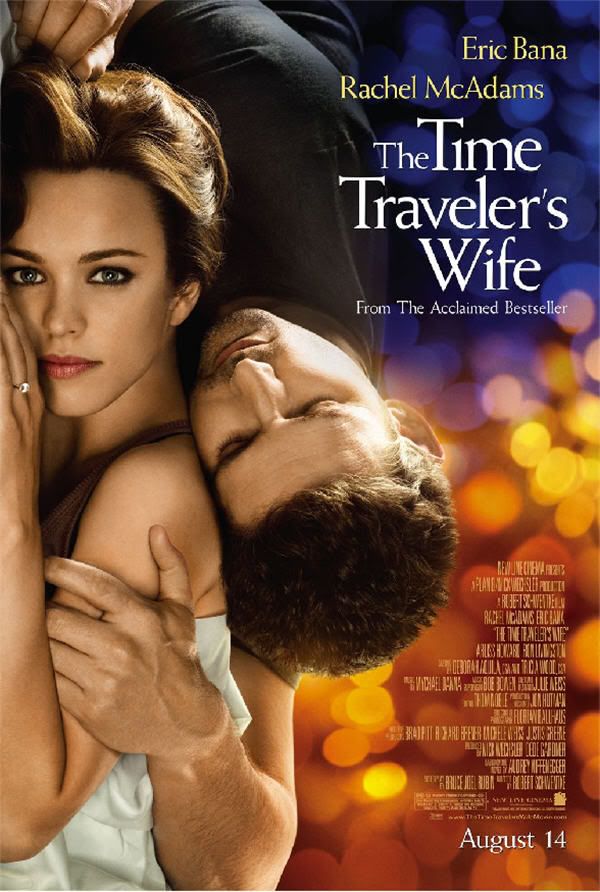
The Time Traveler's Wife (movie)


Henry (Eric Bana) has a genetic disorder which allows him to time travel spontaneously, arriving naked in whatever random destination he might find himself, although more often than not he intersects with his own life. Clare (Rachel McAdams) has been in love with Henry since girlhood, when he visited her from the future. And thus begins the circular question I was asking myself after the movie, and which the movie itself poses--who met whom first? Clare met an older version of Henry as a small girl, but the younger version of Henry meets Clare having no idea that he will meet her in his future, and her past. Thus it is that Clare accuses Henry at one point of having trapped her into loving him because he goes to the past (not on purpose) and imprints himself on her mind when she's a susceptible young girl.

With a brilliant premise, the movie has lots of great moments-and lots of flaws as well, the foremost among them being logic problems. Example: if Henry isn't allowed to interefere with the past, or the future, how is he able to obtain the winning lotto ticket which makes Clare and him millionaires? He can't bring things with him when he travels, so he shouldn't have been able to bring the ticket back with him. The only plausible explanation is that he found out where the ticket was bought, and purchased it in his own time the day of. Which doesn't make sense either because he's not supposed to alter the flow of events. But whatever.

The other major complaint I have is the utterly ridiculous CG caribou. I mean, it was clearly not a real caribou, so it looked really stupid and out of place. Why not just change it to a deer or something, and use a real animal in the filming?

But now on to the good points, which mostly outweigh the bad. The acting-really good (especially from scene-stealers Hailey McCann as Alba DeTamble, and Arliss Howard as Richard DeTamble). The characters-really good. Both leads are enigmatic people, but clearly troubled. McAdams' portrayal of Clare was a little stiff at times, but it did serve to get across her bohemian ice queen image. And while there were narrative problems, most of the logic makes sense when you reflect on it. A word of caution: if you are not a sap and a romantic, you will probably not like this movie. Director Robert Schwentke pours it on almost as thick as The Notebook, and betimes yanks maybe a little too hard on those heartstrings. However, it successfully reiterates the message we all love to believe--that love conquers all, space and time, etc., and in the end it's quite easy to sympathize with the character the movie is titled for--Clare herself. I found it to be a satisfactory romance, drama, and character study with sufficiently-developed characters and lovely cinematography.

-elln

Friday, July 31, 2009

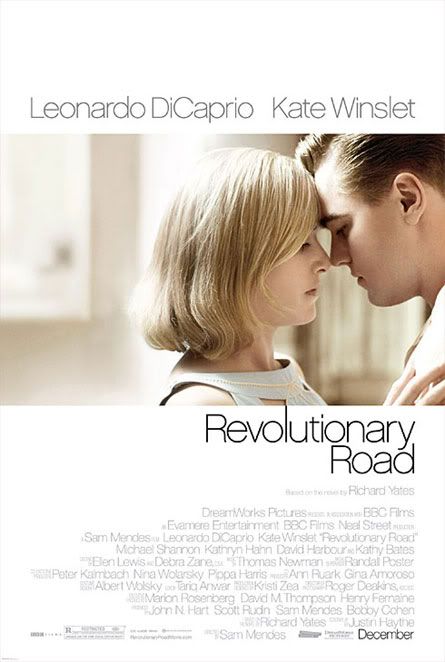
Revolutionary Road (movie)


Frank and April Wheeler are the ideal young couple in 1950's suburbia--bright, vibrant, and convinced that their home on Revolutionary Road isn't permanent. Frank and April's huge argument erupts as a result of that dream shattering, with Frank's dead-end job not exactly lending itself commensurate to his romantic visions of life. April suggests a return to the spirit of youth and spontaneity in the form of a move to Paris, and Frank eventually agrees, but it seems that life and reality have other plans for the couple.

This movie has so many powerhouses behind it, it's hard to imagine a version where it turned out badly. It's directed by Sam Mendes, who did American Beauty which is a gorgeous, gorgeous film; it reunites Mendes' very own wife Kate Winslet with romantic Titanic co-star Leonardo DiCaprio; it's got Kathy Bates; and it's based on one of the greatest triumphs of modern fiction, Richard Yates' novel of the same name.

The direction is a visual feast, and credit must be given to the set designer--I even recognized earthenware my grandmother had from the fifties.

But on to the characters, and the plot, and the writing. The examination of the relationship between Frank and April (and Revolutionary Road) is the key to the entire story; in fact, one reason I had so much trouble relating to them was that I couldn't imagine any normal people who paid so little attention to their children. Most of the time the children didn't exist in the film (probably an authorial and therefore directorial choice to lend more focus to the leads--but it's still incredibly jarring that the children appear briefly, and only when it's convenient).

The film got its point across very cleanly, and the tragedy was unpredictable without knowing the source material. Frank was relatable as a character until he sold out for security; unfortunately, April's character was chilly at best, although by the end she had somehow become the most sympathetic. This movie is an odd creature in that it brings you so incredibly close to two human beings, yet a connection is still difficult to establish. You can only sit there, wishing you could change things for the better, hoping you can knock some sense into these people as Helen Givings' (Kathy Bates) lunatic son tries to do (played in a stunning performance by Michael Shannon). And while Winslet and DiCaprio's performances are central to the film, the tremendous talent of the supporting cast truly evens out the tone of the film.

Unfortunately for us, tragedy is inevitable, and in an ironic twist of fate it's no longer Frank we sympathize with, but April. And while it may be enlightening and gruesome to watch the drama unfold, I have to question how much of a ring of truth some of it felt. Aside from the children not existing, a lot of the explosive fights had dialogue that felt a touch histrionic, with many "Oh God, April,"s, and "Jesus, Frank"s. Sometimes this was even enough to distract from the scene when I had to ask myself Would this really happen? Would someone just come out and say that? A brilliant film in the study of the human condition, and phenomenal taken as a whole, Revolutionary Road nonetheless lacks the heart and relatability which make so many other films a success. That doesn't make it any less worth seeing, though. Just don't expect to get too invested.

-elln

PAPRIKA


If America is the King of Live-Action, then no one can compete with the King of Animation: Japan. If you know anything about film outside of America, that fact should be obvious. And if you follow film here, you may recall a shining gem called Spirited Away which won a 2001 Oscar for Best Animated Feature and is, according to Wikipedia, the highest-grossing film at the box office in Japan ever.

Don't worry, all of this has a point. Because you see, the director of Spirited Away may be the only widely-known anime director in America, and the term "widely-known" is optimistic. The man who should also be acknowledged is Satoshi Kon, who has made everything from the R-rated Perfect Blue to the family-friendly Tokyo Godfathers.

Paprika came out in 2006 to relative laudation and notoriety here in the states, as it well should have been. The movie is a visual masterpiece, with its story bested only by its artistic direction. Kon is the master of confusing dreams and reality, and this movie is written to give him the best excuse he's ever had to show off that particular talent.

A new device called the DC Mini has been developed in the near-future, and it allows people to record, play back, and even enter, other people's dreams. Developed by Dr. Kosaku Tokita, an immature genius whose incredibly obese body houses the mind of a child, his associate Dr. Atsuko Chiba hopes to use the device to treat her patient's psychological illnesses. The device is controversial, however, as the hospital director believes it's a dangerous invasion of privacy. All hell breaks loose, however, when the device is stolen while it's in the development stage and before it's legal. Suddenly, acts of terrorism by the thief via the DC Mini begin to break down the walls between reality and dreams, and it's up to Dr. Chiba and her dream alter-ego, Paprika, to stop the collision.

The visuals are done by Madhouse Studios and they're a sumptuous feast for the eyes; the opening credits sequence is especially clever. The plot itself isn't that complicated; it's the progression of events and the strange sliding of the dreams that keep you unequivocally involved. It's a movie with more width than it has depth, but it has enough depth to make you think about the implications of future technology-both the good and the bad. Most of the time you're so overwhelmed (in a good way) that it's just enough to sit back and enjoy the ride. Although the villain's story regresses from genuine concern over, perhaps, mankind's other final frontier, to a power-trip, the other characters are so full of eccentricities that it's easy to miss his deficiencies. Also, Susumu Hirasawa's music is ethereal and zany.

I haven't seen the sub, although I should see it; however, to get a full experience and focus on the visuals, I would highly recommend the excellent English dub.

If you're a fan of luscious, surreal experiences, thrillers, drama, science-fiction, gorgeous direction, and mind-blowing stories which require an open mind, this is your movie.

-elln

Friday, June 19, 2009

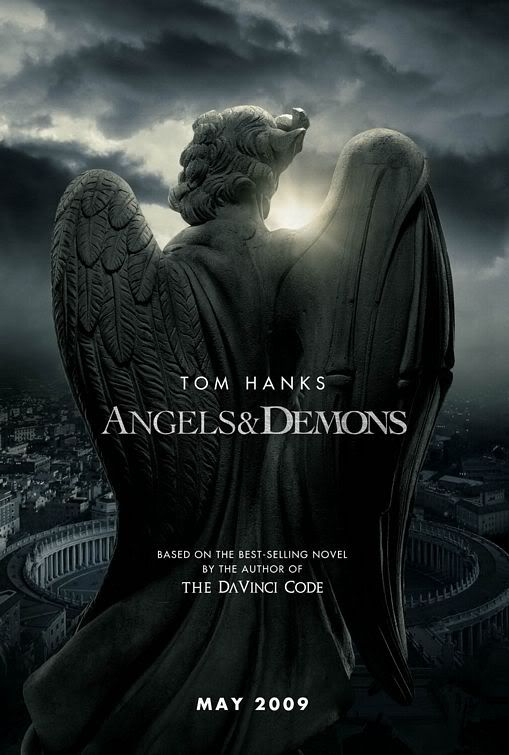
Angels and Demons the Movie


Angels & Demons is a prequel to the famed The Da Vinci Code film and book, but it's no wonder they started with Da Vinci. Angels & Demons offers up a lot of treats, but it doesn't reach its predecessor's level of engagement or clever script-writing.

The basic premise is that Harvard symbology professor Robert Langdon (Tom Hanks) is being called to the Vatican once again (in the movie the Da Vinci affair is treated as though it happened first) to solve the mystery of a secret society called the Illuminati, rumored to have disappeared ages ago. Unfortunately, the Illuminati have returned and are taking the Preferiti (the men most likely to become the next pope) hostage, bent on killing one every hour until midnight in revenge for wrongs done to the Illuminati by the Catholic Church in the distant past. On top of this there's a stolen vial of antimatter lurking somewhere in Vatican city set to explode around that same time, creating a massive nuclear-esque total devestation. Major players besides Langdon include Dr. Vittoria Vetra (Ayelet Zurer) who desperately wants to recover the antimatter she helped create, Commander Richter of the Swiss Guard (Stellan Skarsgard) is being suspiciously uncooperative, and the Camerlango (Ewan McGregor) wants to save the people of the Vatican city while investigating the Pope's recent death.

This movie has several strengths, including directing and pacing, as well as the simple pleasure of seeing parts of the Vatican the public eye will never be privy to in life and some of the finest sites Rome has to offer. In terms of a mystery/thriller it's fast-paced and entertaining with several twists. But a glance beneath the surface reveals several gaping plot holes not easily explained away--for instance why the perpetrator lines up the clues so neatly for Langdon, and then tries to kill him in the middle of the movie. Or why Langdon can enter a church and within two seconds declare, "the angels are pointing to it!" and run wildly down the street. Also be prepared for a really nasty rat-eating-decayed-face scene, and little to no character development.

Also Ewan McGregor steals every scene. Because he's just that amazing.

All in all it's the script which has the real problems. If you're just looking for a fun, engaging ride this is your movie, but be sure to keep it cursory.

-elln

Sunday, May 17, 2009

STAR TREK


You know those big-budget films that come out every once in a while that restore your faith in Hollywood's production companies? This is one of those, ten-fold. Sure it's still technically a remake/incarnation/alternate retelling, but it'd be pretty damn hard to do it better than this.

James T. Kirk (Chris Pine), son of a dead revered commander who died saving the lives of James and James' mother, is convinced to go to the star fleet academy where he first butts heads with superior officer half-Vulcan half-human Spock (Zachary Quinto). Soon, however, the inexperienced cadets are called on an emergency mission and James stows away on the USS Enterprise, a ship which comes face to face with the Romulan ship who annihilated James' father the day of James' birth.

This package is very bright and shiny, and the action just keeps on coming. J.J. Abrams is directing, and though I haven't seen any of his other work he's earned himself a fan in this girl for solid edge-of-your-seat pacing, and the right balance of character development time interlaced with all the action. Of course he was working with friends Roberto Orci and Alex Kurtzman who wrote the excellent script. There was minimal exposition and great snappy dialogue, not to mention barking moments of brilliant black comedy.

Then there's the nod to be given to the technical stuff. This is what we should be using it for, not crap films where Will Ferrell is running away from a giant CG T-Rex. The special effects were awesome (my favorite scene has to be their crash landing on the giant drill). Also this is my nod to the soundtrack.

And finally ERIC BANA!! That's right bitches he gets his own section. He plays Nero and he's basically Hades combined with an evil version of Caesar with some sexy mixed in (ooh...that gravelly voice). First of all props to his costume/look designer because it took me half the film to recognize him. He actually had a good reason for why he wanted to kill James & co. (and no, it wasn't because he wanted to take over the world) and he made me sympathize with him in the fifteen seconds of explanation he got.

So even though this felt like a prequel and explained how James became captain of the USS Enterprise and got his crew together, it was amazing. One thing I was particularly impressed with was the character developments of Spock and James, and the choice of love interests. While I'm sure James' love interest is truly just around the corner, the choice was daring by the writers to leave her out in this film. It left time for James to focus on himself and only himself, on why he was doing what he was doing and what he wanted to accomplish. In contrast, giving Spock a human lover (even though he's a slightly secondary character to James) when he was struggling with his being half-human and half-Vulcan brought out his humanity.

This is a must-see.

-elln

Thursday, April 23, 2009

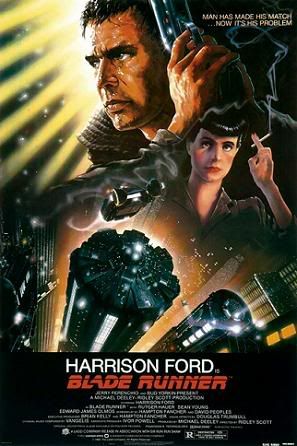
Blade Runner (some thoughts)


Blade Runner is such a beautiful and controversial film, and so much has been said about it, that I don't have too much left to say. However, since it serves as a model for sci-fi today, there is nothing lost in discussing it.

First, props to the amazing setting and cinematography. The film looks fresh even today (though perhaps that's the result of my watching the Director's Cut), as do the special effects and the creation of humanity's future dystopian society.

Rick Deckard (Harrison Ford) is a blade runner, or an assassin of highly advanced robots called replicants which only have four-year life spans and are illegal on earth. Though he is retired, when four of them come to earth--Zhora, Pris, Roy, and Leon--Deckard is reenlisted to find and "retire" them.

The dystopian world is portrayed beautifully, and the Voight-Kampff tests are especially creepy and effective in breaking down the walls between human and android--because that is the main question the film poses: what exactly does it mean to be human?

Rachel (Sean Young) is the ultimate example of the blurry definition of humanity. She appears and acts human, and it takes 100+ questions in the Voight-Kampff test for Deckard to determine that she is a replicant. There is even room for speculation about whether or not Deckard is a replicant. My one compaint regarding the Rachel-Rick relationship is that though I understand that Rachel didn't know how to express her love, I could have done without the psuedo-rape scene.

The film is rich in depth and complexity as the replicants struggle to sort out their feelings. They are torn between killing to stay alive and feeling sympathetic towards humans; they don't know how to love, and struggle to express it. They question what they are--human or machine--and this confusing transience causes them to lash out in violent and unpredictable ways.

I also appreciated the appropriate characterizations in such a dystopian society; many archetypes are flipped in their heads. Deckard, the hero, is an anti-hero; he's is billed as a hard-boiled cop, but most of the time he's just running for his life and has no clue what to do. Roy, such a great villain because of his creepy unpredictability and complex motivations, does an inexplicably good thing at the end of his life.

The largest problem with the film is the pacing. There are bursts of action followed by long stretches of noir film homage, shady alleys and Ford looking appropriately pensive doing "deep thinking"; after its release, this complaint proved to be the largest, so I don't want to hear adults talking about how "us kids now-a-days don't have no attention span."

Apparently in the original version there were much larger problems, such as voice-overs towards the end explicitly stating Deckard's feelings during the somber final scene, in an attempt to "simplify" and broaden the audience i.e. an Explanation Included For All Those Stupid Americans Because They Obviously Won't Get It, or rather a last-ditch attempt to make the film more popular. There is also a scene included of Rachel and Deckard cruising on a gorgeously sunny road, a sharp and inappropriate contrast to the truly dark end of the tale where Deckard's former blade-running mate, Gaff (who communicates primarily through origami) leaves a paper swan at Deckard's apartment, which can be interpreted two ways--he is letting Deckard flee with Rachel and turning a blind eye, or he is letting Deckard know that he will be following them.

There is so much ambiguity in the film, echoing the cold amorality of the world and of the protagonist, that it's a wonder anything was created that can be taken in so many ways; and therein lies the true beauty of Blade Runner.

-elln

Saturday, April 11, 2009

ADVENTURELAND


Imagine Nick & Norah's Infinite Playlist ten times better, and then cross it with American Graffitti and you get Adventureland.

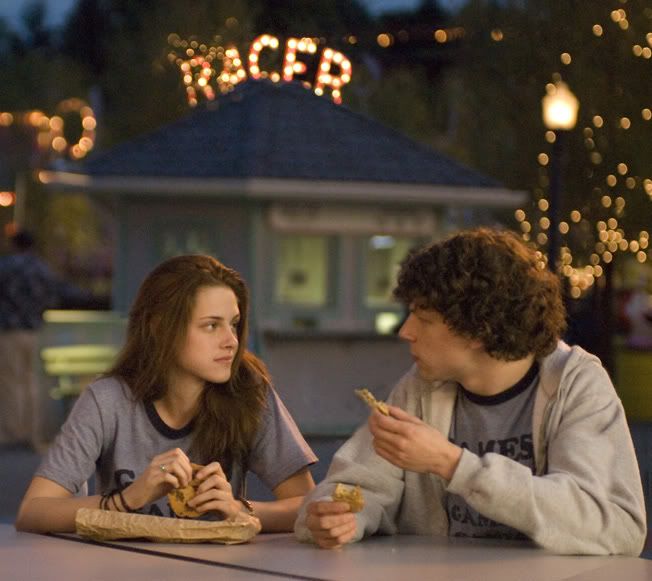
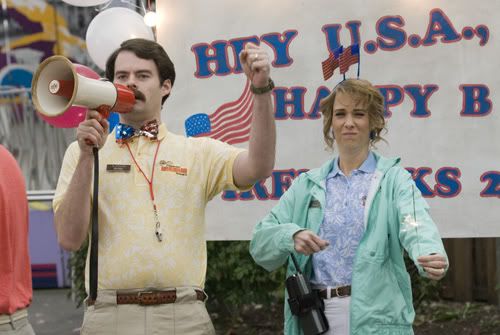
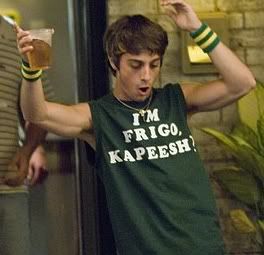
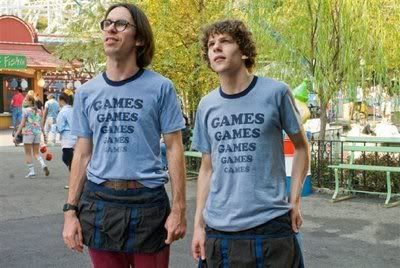
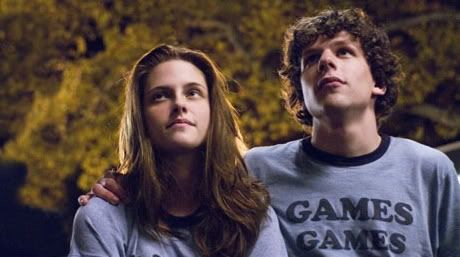
It's the '80's, and James Brennan (Jesse Eisenberg) is off to Columbia grad school in the fall. He's due for a tour of Europe this summer with his yuppie-nerd future roommate when James' father loses his job and James is forced to take a job at the local amusement park in Pittsburgh, Adventureland. His employers are the delightfully bossy and ever-pragmatic Bobby (Bill Hader) and his wife Paulette (Kristen Wiig). James quickly falls in with the cynical Joel (Martin Starr), a Russian literature major, and reluctantly reunites with childhood livewire friend Frigo (Matt Bush). Then fellow employee Em (Kristen Stewart) saves James from a knifing by an angry park-goer, and James' summer takes off as he enter a world of drinking, smoking, and finding true love. But as James is falling for Em, he has no idea that she's sleeping with married maintenance guy Connell (Ryan Reynolds), and notorious flirt Lisa P (Margarita Levieva) may be after James' heart as well.


This movie is so far above and beyond the average romantic comedy that it's hard to describe everything it does right. I'll start with the humor. It's not over-the-top like Superbad, it doesn't try to hammer you over the head, and yet I was laughing out loud more than once. It takes all the typical amusement park tripe (kids throwing up, food being inedible, a running "giant-ass Panda" gag) and breathes life and
every day humor into them. Then there's snarky deadpan comic timing from Joel, as well as the absolutely insane Frigo's physical comedy antics (like ruining a moment between James and Em by peeing on Em's window from outside). Even the camera angles and composition play to the humor, such as showing Joel's little brother mowing the lawn and then panning to reveal why the mowing is such a problem-it's because Joel and James are trying to have a serious conversation and the lawn is literally 2x2 feet.

Then there's the awesome, awesome soundtrack, featuring songs by Lou Reed/The Velvet Underground, David Bowie, The Cure, The New York Dolls, and original music from alt rockers Yo La Tengo.


What really makes this coming-of-age story shine is how real it is, and the depth of the characters. Em and James aren't the only characters given development. When Joel has his heart broken, we realize that he's not there just to be the dark, gloomy, doomed-to-a-hell-that-is-Pittsburgh comic relief-he's real, and his life sucks. Connell is a Lothario-like musician who "once played with Lou Reed" (though it's hinted at multiple times in the movie that this is a lie) whose mystique and enigma are gradually peeled away to reveal not an advice-doling older brother figure to James, but a shallow womanizer who could care less about the people he sleeps with.
Em is dealing with the tragedy of having lost her mother two years ago, and now putting up with her horrible stepmother and less-than-proactive father. While I'm generally not a fan of Kristen Stewart, I will admit that she played a great Emotional Wreck here (though it'd be great if she could stop pulling her hair out all the time). Em came off as greatly unstable and insecure, but also as a beautiful, kind, and intelligent soul.

Jesse Eisenberg played one of the most adorable male leads I've ever seen. I've never understood why people like Michael Ceras so much because his characters are often incredibly flat or spineless-this is not the case with Eisenberg. He's endearing and charming and brave and sweet and funny. Win win win!

Anyway, you've got to hand it to a movie that portrays real life, true day-to-day antics, this well and with this much humor, heart, and sympathy.


Masterpiece.

-elln

Monday, March 23, 2009

Hamlet 2


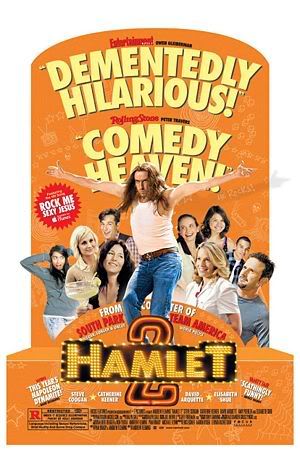
There's nothing out there at this moment that parallels the absolute ridiculousness of Hamlet 2 (except maybe Animal House, a landmark work of comedic genius). It's so over-the-top in such an understated way that many of the giggles come from being discomfited and stunned by the outrageously embarrassing, ludicrous, hammy, and offensive behavior of the main character, Dana Marschz, played by Steve Coogan.

Dana is a failed TV-commercial-actor-turned-drama-teacher in the city "where dreams go to die" of Tucson, Arizona. He only stages play adaptations of popular Hollywood movies, however, and he only has two students, the overtly gay Rand (Skylar Astin) who is in denial abous his sexuality, and the bright and bubbly Epiphany (Phoebe Strole) who "gets nervous around ethnics." When the school district cuts all electives but drama, all the "ethnics" Epiphany is so nervous about come to drama, and the movie goes in the typical direction of a teacher having to show love and compassion to "ghetto" kids to get them away from drugs/crime/pregnancy/etc.

And yet the movie itself is poking fun at movies like Freedom Writers and less esteemed movies of its ilk. Dana proves to be the worst teacher ever, cursing like a sailor at his class to make them listen to him and then demonstrating his blood-curdlingly awful acting skills. Epiphany's "understanding" of her "ethnic" classmates is so overdone that she begins to act like a poverty-ridden ghetto teenager, sprinkling words like "homie" and "vato" throughout her vocabulary in a hammed-up attempt at a Mexican accent, though she is clearly from a white upper-middle class family. In fact, many of the Mexican-American kids are not poor; when the star of the show Octavio declares that his parents have objections to the show, Dana marches off to have a poignant heart-to-heart with Octavio's (Joseph Julian Soria) ignorant, poor Mexican parents.

In an especially brilliant scene, Dana begins the conversation with, "You can't let your ethnic narrow-mindedness stop your son from thriving in our culture." Once you get over the shock and horror of this line, you can begin to appreciate what happens next.
Octavio's father then goes on to say in impeccable English that he has published nine novels and has a PhD in literature; Octavio's mother is a painter with an exhibit at the Guggenheim. Octavio has a 3.9 GPA and is going to Brown.
Dana then begs for help for his own work, especially the original play he has written and his drama class performing.

Oh, wait, did I not get to the play yet? It's a sequel to Hamlet, except it's really just Hamlet rewritten with a time machine so that Hamlet can go back in time to save Gertrude and Ophelia (with the help of, who else?, Jesus).

In fact, Dana's wife Brie (Catherine Keener) reads the opening lines for us in the first draft of his original work:
"'The time machine door opens revealing Hamlet, Gertrude, Palonius, and Hilary Clinton having what appears to be group sex,'" to which Dana responds,"That's about my troubled relationship with my father."

Trouble ensues, however, when the principal of the school reads the play and deems it too pornographic and offensive to perform. But luck is on Dana's side! Though his wife is leaving him for their pathologically boring (but fertile-which Dana is not) boarder, Gary (David Arquette), one of Dana's junkie students has a friend whose meth lab just burned down, and it turns out it's the perfect place to host the show.

Wirework is provided by a backyard start-up business, two guys who have no idea what they're doing and smash mute student Yolanda into a wall during the first trial. But by the time of the show, the wirework is good enough for Laertes and Hamlet's mid-air light saber battle to be a hit.

Meanwhile, Dana is becoming a local celebrity, and when people try to censor his work Ultimate Bitch-Lawyer Cricket Feldstein (Amy Poehler) comes to the rescue to take this civil liberties case to the national level.

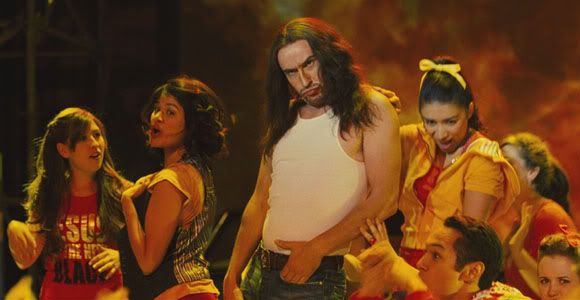
The play starts with an introspective musical number, complete with blue lighting and pensive acting, entitled, "Raped in the Face." Laertes is featured in a number of scenes looking decidedly gay, first in a cowboy outfit and then as a 50's greaser during the "Rock Me Sexy Jesus" number.

If you're going to watch for anything, at least watch for the "Rock Me Sexy Jesus" musical highlight.


Meanwhile, there's rioting outside, and when Octavio points out that it's intermission, Dana replies, "We can't have intermission now, the Fire Department's trying to evacuate the building."

Eventually, Dana ends up a world-renowned director and his play goes on broadway with the original cast.

It's a delightfully horrifying film for all the right reasons-it appears to take itself seriously and the situations are presented so pragmatically by Dana that it takes you a moment to stop and think about the layers of satire and not-very-plausible things going on; and when you finally do realize the utter ridiculousness of it all, your mouth will be hanging in delicious shock all the way to the floor.

-elln

Thursday, January 29, 2009

When the Nicholas Sparks Formula is Trampled by Wild Horses (Nights in Rodanthe)


So on the plane ride back from Italy, I was subjected to the latest Nicholas Sparks movie-turned-novel slush-fest that is Nights in Rodanthe. Now, granted, I adore The Notebook, I think it's a great movie and there are reasons for that. I have much more mixed feelings about A Walk to Remember (namely the vomitatiously flawless, marytred characters). But Nights in Rodanthe sealed my opinion that, with The Notebook, Sparks, thanks in part to director Nick Cassavetes, struck gold for the first and last time.

Basically, Adrienne Willis (Diane Lane) is an almost-divorcee whose marriage seems to be falling apart. In the interim, she is running her friend Jean's house-turned-hotel on the beach in The Middle of Nowhere. And in walks Paul Flanner (Richard Gere), a successful, well-dressed doctor who has some mysterious tragic purpose for coming out to Bumfuck. Turns out he accidentally killed a patient because he was distracted by his personal life during the operation (except that in a later, garbled explanation, it turns out she was actually allergic to the anaesthesia, so Gere neatly slips out of that moral noose). And then they fall in love.

Which would all be fine if the resolution to the possibly interesting moral obstacle weren't solved so quickly and easily and by such a nice, forgiving man as the dead lady's husband. It's lucky the acting is good, such as Scott Glenn's performance as Robert Torrelson, the dead woman's husband, or else you might as well have substituted cardboard cutouts in for the characters.

And then there's the script. Ugh. This is the key problem in the film. The dialogue is so melodramatic, so ridiculous, and so contrived that it's hard to keep a straight face even when Diane Lane is sobbing hysterically and clutching a letter to her chest because the whole story has been so goofy. Especially priceless are the arguments Lane has with her daughter Amanda, played by Mae Whitman. Then you have lines like:

Lane, looking wistful and tracing the tabletop with a single finger: "I gave up art...when I got married..."

oh yeah. Real subtle.

Then there's the deep conversations between Lane and Gere during their courtship:

"What's this box, Adrienne?"
"I made that. It's to keep special things safe."
"Yes, Adrienne, but what keeps you safe?"
"..."
"Your PENIS!"

But seriously. Maybe people in real life do say idiotic stuff like that to each other. Not me.

I won't discuss the tornado scene. Let's just say that it was possibly one of the most confusing, ill-constructed scenes in a movie I've ever seen.

Even the one original plot twist is screwed up by goopy, icky slow-motion flashbacks of the tragedy and how it EXACTLY happened so that the audience can, purportedly, be further tortured and shed buckets of tears. I was rolling my eyes, and I'm not even a cynic.

Seriously, this movie was awful. The culmination of all of this awfulness, however, was the wild horses. We're clued in at the beginning that, because Lane says, "No, the wild horses never come this far up the coast," that exactly the opposite will happen. And then, at the end of the movie, Lane is walking down the beach melancholically and what do you know? Thirty, count 'em, thirty horses or more come galloping full-speed down the beach, manes billowing brilliantly in the wind. I know that horses are naturally herd animals, but when I was on Chincoteague I never saw more than two or three horses together at a time. Perhaps the movie would have been more interesting if Lane was trampled at the end.

-elln

Saturday, January 24, 2009

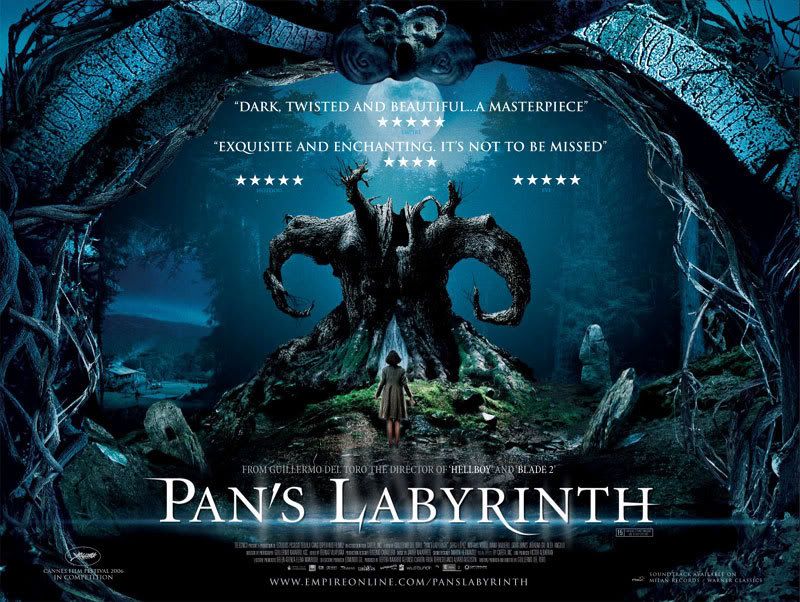
Into the Labyrinth (Guillermo del Toro's masterpiece)


I saw this in theaters, when whisperings of its greatness were just beginning to seep into the media. In fact, it had such a limited release that I had to go a half-hour away from my house just to find it! And was I pleasantly surprised--I left the theater speechless.

I'm certainly not speechless now.

In the 2007 Academy Awards, Pan's Labyrinth was nominated for six awards including Original Score, Foreign Language Film, and Original Screenplay; but it took the awards for Cinematography, Art Direction, and Make-up.

The movie takes place in the violent aftermath of the Spanish Civil War. The main character, a young girl named Ofelia, moves to the countryside where her pregnant mother is to wed a brutal Captain of the Spanish military who is overseeing the extermination of remaining rebel groups.

From the very beginning, the audience gets the sense that Ofelia has never belonged in this world; this feeling proves true when she is visited by a creature of the underworld. The creature, a faun, brings her three tasks. If she can complete the three tasks, she can return to the underworld as the reincarnation of a princess who lived there long ago.

The stories run in parallels with one another, for there is the dark, historically fictional plot which follows the cruel captain as he violently murders various revolutionaries, as well as the struggle of Ofelia’s nanny, Mercedes, who is a spy for the oppressed visionaries. Then there is Ofelia’s plight- the desperate struggle of a young girl to save the mother who is doomed to die, to face the hatred of her soon-to-be stepfather, and to prove herself worthy of being the princess of the underworld. Of course Pan, faun and servant of the underworld, is there to guide Ofelia along the way- but the question is constantly in the viewer’s mind as to whether or not the faun is a creature of good or a creature of evil.

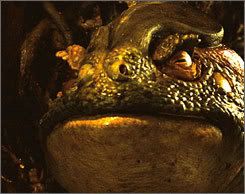
The acting is superb; Sergi Lopez is particularly despicable as Captain Vidal. Maribel Verdu plays a Mercedes who is valiant, lovely, and admirable. The directing is equally gorgeous, and colors appear bright and beautiful and seem to jump off the screen. Vivid images such as the giant golden toad, and Pan stepping out into the blue moonlight remain in my mind.

But my favorite part of the movie? The score. In a business where scores often "do their jobs" and nothing more, Javier Navarrete's score is breathtakingly wondrous. It is truly eerie and eloquent in its creepy lullaby repetition, underscored by soft violins, vague piano notes, a delicate hum, and the occasional Spanish horn. The score adds to the sense of other-worldliness for this fantastical movie that is both violent and beautiful at the same time. Pan's Labyrinth brings a new meaning to the word “tragic"; it is both sorrowful and hopeful, and the ending is delightfully ambiguous and left up to interpretation.


-elln


Tuesday, January 20, 2009

Buffy: More Slaying, Please (Twilight the Movie)

"I'd never given much thought to how I would die...I would not have imagined it like this," Bella Swan muses. I, personally, never imagined that I would want to die in a dark movie theater watching a dull romance about two teenagers, one brain-dead and one undead. But there I was, staring at the screen and then at my pencil, temptation playing itself out.

Stephanie Meyer's overblown and overrated (called the next Harry Potter and the greatest love story since Pride and Prejudice) Twilight series has been swept off bookstore shelves and into the hearts of teenage girls and their developmentally arrested mothers. Twilight tells the "epic" story of an ordinary adolescent girl, Bella Swan, who falls "irrevocably" and "unconditionally" in love with the "devastatingly, inhumanly beautiful" century-old vampire Edward Cullen. On November 21, 2008 the film adaptation of the first novel, Twilight starring Kristen Stewart and Robert Pattinson was brought to the big screen to the delight of young and impressionable girls.

Stewart is well-cast as Bella Swan, possibly the most awkward and self-doubting 17-year-old ever documented in fiction. While Bella’s blandly whiny self-absorption is grating in the series, the transition from book to movie makes her infinitely more likable, as her most puerile thoughts remain contained in her head.

Unfortunately, the same cannot be said for Robert Pattinson, whose range of emotions run from extremely tortured to only mildly tortured. The characters are flat and lack real personalities: Bella is defined by her insecurity, a severe inner ear problem, and an eerie dependence on Edward, The Perfect Boy, whose favorite activities are staring longingly at Bella and sparkling like a supernatural disco ball.

The movie isn’t helped much by the terrible script and inevitably improbable plot. Twilight in a nutshell: “Suffer-in-silence type” Bella is adored immediately upon her self-imposed exile to Forks, despite her lack of interest in any of the other kids in school—she has eyes only for mysterious and beautiful Edward. Edward appears at first to be repulsed by Bella, which attracts her even more. One car crash and several awkward conversations later, Edward confesses that he is in love with both her and the smell of her irresistible blood. Bella decides she’s okay with that: no relationship is perfect.

After Bella and Edward get together, the rest of the film pretty much consists of the two of them gazing chastely at each other in fields, trees, etc. and hanging out with his equally mysterious and beautiful vampire family. Then the evil vampire trio arrives and decides that Bella’s blood would indeed be delicious, not that the audience cares by this point. The film culminates with Edward and Bella dancing together at prom while Bella plots ways to convince him to turn her into a vampire. Because after a month, she knows they’re meant to be together forever.

Highlights: vampire baseball, Edward advising Bella to “hold on tight, spider monkey”, Bella whispering how beautiful he is (to which Edward responds by ripping off his shirt and bellowing that he has the “skin of a killer”), and Bella’s complete and total overreaction when Edward suggests that their relationship might end someday (“WHA-You just can’t say stuff like that to me. EVER.”).

The movie is an improvement over the book, but there are things no director can fix. Twilight can’t decide whether to be a supernatural fantasy or a teenage romance and settles for a clichéd hybrid that substitutes shaky close-ups of the character's faces for an actual plot. The theme of dangerous first love between a human and a vampire has the potential to be a decent story. Unfortunately, Meyer’s tale of teenage obsession over an indestructible and iridescent vampire fails to meet it.

Fans of the series may enjoy. The rest of us will quietly suppress our nausea.

-Acerbec and Riding

Baz Luhrmann's AUSTRALIA


Australia is supposed to be Baz Luhrmann’s magnum opus, right?
He spent seven years making it. He thought up six different endings and shot three of them.
So after Moulin Rouge of “truth, beauty, freedom, love” fame, why is everyone disappointed by Australia?

I. LOVE. IT.

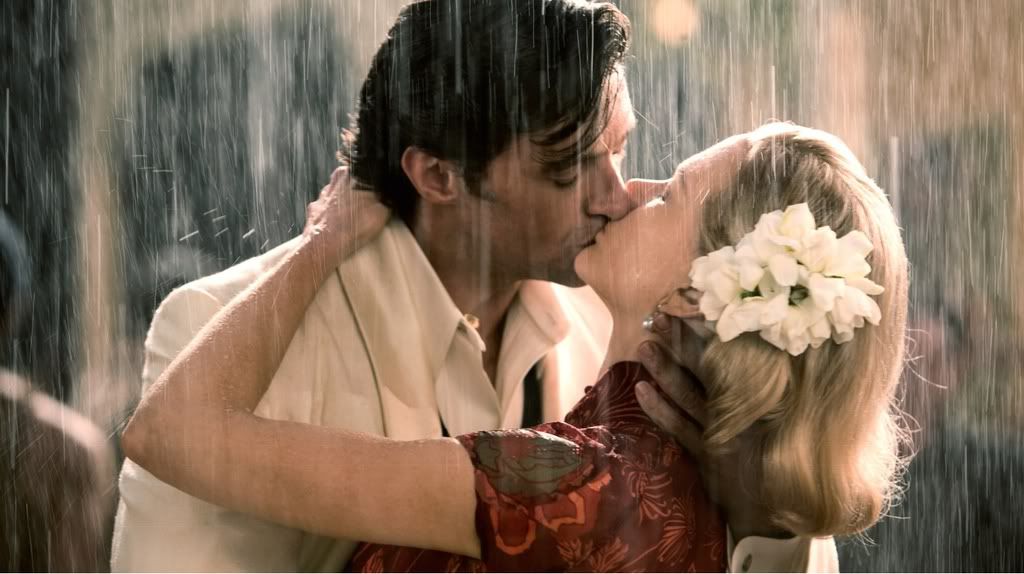
It's three hours long, and the plot deals with a myriad of elements which center around the romance of cattle driver Drover (Hugh Jackman) and aristocratic, prim landowner Lady Sarah Ashley (Nicole Kidman). It’s part action film, murder mystery, romance, and war movie, and hearkens back to classic Hollywood where characters weren't exactly complicated. Actually, it reminds me in some ways 0f Gone With the Wind. The characters are still likeable—Australia isn’t meant to be a complex character study—if you think otherwise about any of his films, you’re reading too deeply. They're mostly about tragically tragic romances told in ridiculously entertaining, tear-jerking ways.

But that's not the true highlight of the film. The cinematography— the homage to the Australian landscape— is the true meat of the movie. Each panorama is filled with dry rock and desert and a sky so blue it looks as though it’s part of a dream; the scenery is truly breathtaking. Equally brilliant is the directing; arguably the most stunning scene in the movie involves some three-hundred cattle charging toward Nullah (Brandon Walters), Sarah’s adopted half-aboriginal son, as he stands at the edge of a cliff. The technical effects are seamlessly integrated with the actual film; the scene looks entirely realistic.

The musical score is nothing to snub, either, with sweeping orchestral arrangements capturing the beauty of the romantically barren land.

It’s a fun adventure and the filming is drool-worthy; if your thing is dark, edgy, psychological films, or complicated studies of human nature, then Australia probably isn’t for you. If you enjoy the sappy romance of something like, say, The Notebook combined with edge-of-your-seat action and sparkling scenery...then I highly recommend it.

-elln