Sunday, February 7, 2010

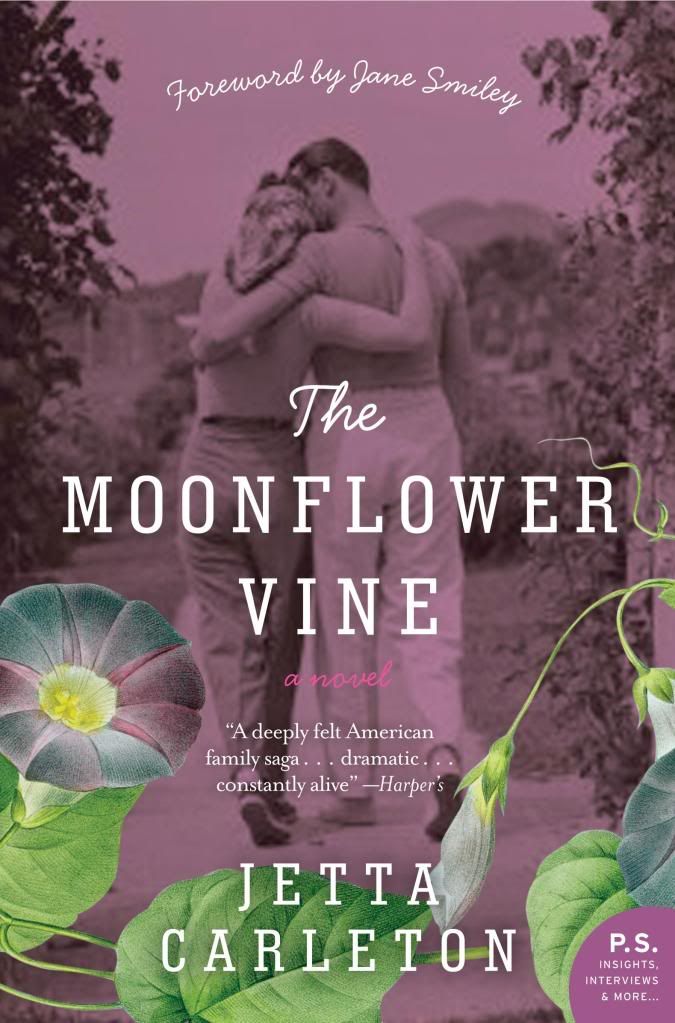
Jetta Carleton's THE MOONFLOWER VINE


Hailed as a rediscovered classic, The Moonflower Vine shares many parallels with Harper Lee's famed To Kill a Mockingbird. Both are the only novels of their respective authors; both are autobiographical in nature, and focus on socio-political issues of their respective times and places without making those issues the story's focus. For Lee, it was southern rascism; for Carleton, it was women in the Midwest.

The story centers around a farming family in Missouri, the Soames family. Matthew Soames overshadows the whole family with his religious devotion, and stringent nature; Callie Soames is the family rock, and mother of four, Jessica, Leonie, Mathy, and Mary Jo. Carleton's narrative captures their triumphs, doubts, and tragedies over the course of a lifetime.

The strength of this book is undoubtedly its simple but slicing characteristics. Matthew is never convinced that he himself is good enough, a feeling he projects onto his daughters and particularly eldest Jessica; by contrast, he is constantly in conflict with himself, struggling with feelings of inferiority within himself while lording superiority over his wife, children, and the townfolk. Outisde the house he is beloved and respected; within, he barely acknowledges his family. Yet he isn't the evil tyrant we, as readers, want him to be; instead, he is a deeply divided, harsh, lost man, needing Callie probably more than she needs him.
Callie is more of an enigma, and we follow her viewpoint last in the story--the book is divided into six parts, each following the life of a separate family member. She is a much more simplistic character, but she understands Matthew perfectly; their marriage is frought with love and trials of fidelity, and patience.

The sisters, too, feel connected but are distinct enough to make this a genuine family. Jessica is the headstrong, grounded first child who makes a foolish decision, while Leonie is the anxious good-girl with her own folly. Mathy is utterly reckless, and the Mary Jo whom we only truly meet as an adult is introspective and wise beyond her years (and is undoubtedly the author; Moonflower is, after all, her only novel). The events of their lives unfold with the practicality a Midwestern story should possess; this isn't an overblown soap-opera, but rather a tale of dreams tucked quietly away into treasure chests while one house serves as a harbor for all the ships to come home to, year after year in the summers.

Verdict: The story doesn't reach the heights of greatness that Mockingbird does, though it's hard to pinpoint why. However, it's a wonderful family drama and in-depth character study, and as much about one family as it is about an oft-unexplored pocket of America.

-elln

Saturday, January 2, 2010

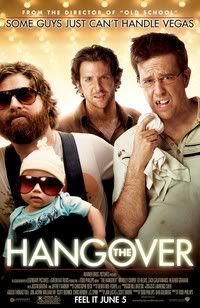
The Hangover


It was recently New Years so this seems appropriate fodder. So let's talk about the highest grossing R-rated comedy ever. And what makes it so funny.

Todd Phillips hasn't really produced anything this, well, sophisticated before. Odd word choice, and yeah it's a comedy and it can be gross but it never dips to the gratuitously disgusting levels of something like Superbad. In fact, most of the humor comes from the absurd situations our beloved characters find themselves in.

On a trip to Vegas to celebrate Doug's (Justin Bartha) last nights as a free man, he and his buddies Phil (Bradley Cooper), Alan (Zach Galifianakis), and Stu (Ed Helms) are accidentally roofied and can't remember the entire night. They wake up in the hotel villa with a tiger, a chicken, a baby, a missing tooth, and a missing Doug. Desperate to find Doug, the three remaining men try to piece together the night before to save Doug's wedding and their own butts.

A film like this has to succeed on the performances of its leads, and The Hangover does just that. Bradley Cooper thrives in asshole roles (see Wedding Crashers) and pulls off fast talker, narcissistic Phil perfectly. Stu is the goody-two-shoes, owned-by-his-girlfriend, nerdy but successful dentist who usually picks up the tab. And then there's Alan...oh, Alan. Invited because he's the bride's brother, Alan is the perfect example of one of those guys in real life who don't have anything wrong with them that you can pinpoint, like Asperger's, but who continually make socially awkward, ignorant, or stupid comments that either make you laugh in disbelief or shy away from them while trying to mask your expression of horror at the same time. They say things like, "I didn't know they gave out rings at the Holocaust!", one of Alan's best lines, with complete and honest surprise. Sounds like a certain Belushi we all know and love.

The characterizations are refreshing in that we know these stereotypes, but they're downplayed and believable here. The acting is top-notch, as is the writing as the absurdities continue piling one on top of the other. The humor ranges from slapstick to jawdropping to situational irony, and yet somehow it all feels real. It feels like these guys could actually steal Mike Tyson's tiger, and actually get tazed for fun in a police station, and actually drive a cop car around illegally.

This is, of course, a certain brand of humor. Not everyone will find the humor base enough, or mainstream enough; it's a bit offbeat and quirky at times, especially some of Alan's creepier moments. This isn't stupid comedy, and the dialogue is smarter-than-average. Even if the premise sounds tried and tired--four guys go to Vegas for a wild night--it's so well-executed that it definitely had me cracking up. The only way you'll know, though, is to try it for yourself.

I do have to comment on the weakness of the soundtrack. A couple of the hip-hop/rap songs may have suited the tone of the movie, but they were way too noticeable and completely overtook some scenes instead of supporting them.

Verdict: While the premise may sound cliched, this is one of the funniest comedies of 2009 (and perhaps the decade), and certainly the most well-written.

-elln

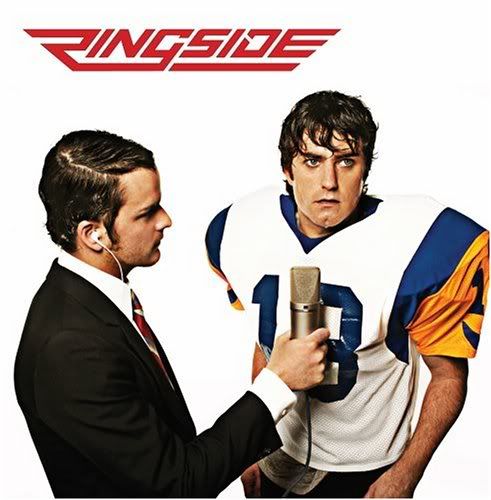
Ringside's RINGSIDE


In 2005 Ringside debuted its self-titled album to minor buzz, but quickly faded out of the limelight. They promised another album in 2007 to arrive the following year, but that never came to fruition. Their debut is a low-fi indie album with an emphasis on clever pop in the vein of a less experimental Eels. It's a largely undiscovered gem aside from two singles which received modest play in commercials and such, but it's easy listening for those of us who are suckers for well-crafted pop.

The album opens with "Struggle," arguably the catchiest song on the whole thing, and a laid-back version of Eels meets Grand National. It's a very polished piece of light-weight, smooth pop; if you get anything from this album, get this smoky, cool, seductive song. "Cold on Me" flirts with a jazz/blues background, while "Trixie" is a solid if forgettable album addition. "Miss You" is as downer as the album gets, and while the lyrics are far from sophisticated, the tune carries the song (this is the case for much of the album), and it's almost reminiscent of Coldplay without the lush sound. "Dreambat 730" is a pleasant surprise and one of the album's strongest offerings, though the rhyming walks the fine line between immature and intelligent. It does proffer the album's most provocative lyrics if only for their nonsensical qualities, particularly in the second verse where Scott Thomas tackles masochistic love: "I think I need my spine cracked/break my back/come on, baby, take me back/pinch me, lynch me, hang me from old hickory/sing your sings of peace and love/come on, baby, beat me up/oh, now, don't worry/I like it when you hurt me."
"Sleep Well, Jeff" is catchy enough, while "Talk to Me" is probably the sleekest, smoothest track on the album. "Raining Next Door" is another song with subpar lyrics but with a solid enough hook to make it another quality track. "Criminal" demonstrates that Ringside should probably stick to the catchy, shallow indie beats instead of ballads-turned-cheesy like this one. One moment it pulls at the heartstrings and the next it's easy to be scornful at Thomas' attempted soul-baring.
"Jackie" is a better effort than the earlier, sounding even a bit Mellencampy aside from the synth effects. Unfortunately, all the titles on the album tracks are abysmal.
Ultimately, the electronica keeps the listener at arm's length, but you're still gonna be admiring across the distance. This isn't the best thing since sliced bread, but in spite of its lyrical mediocrity and lack of experimentation, smart melodies and insanely addictive electronic production make it a diamond in the rough. For lovers of Eels, Grand National, Hard-Fi, and RJD2.

Verdict: Unimaginative on the lyrical end, Ringside's negative aspects are outweighed by catchy beats and immaculate production.

-elln

Monday, November 30, 2009

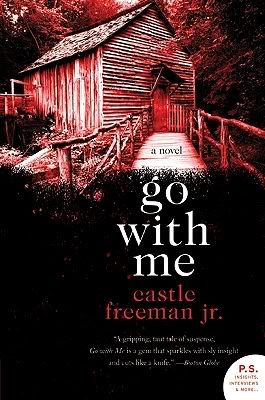
Castle Freeman Jr.'s GO WITH ME


Who names their kid "Castle"? Just had to get that out of the system.

One of the most underappreciated art forms ever, not just in America, is the novella or short novel. For most novels you can cut out a ton of the content and have a cleaner, better story. But, for some reason, people don't take them seriously. Freeman Jr.'s Go With Me should make people think twice.

In a tiny, rugged Vermont town Lillian is being stalked. A local enigma, Blackway, has killed her cat and forced her boyfriend out of the state. She doesn't have proof, so local law enforcement advises her to find other ways to deal with the situation. She seeks out the aging Lester and young Nate to help remedy the situation with Blackway; meanwhile, the town elders sit around contemplating who will win in the impending fight.

This story is cold, stark, and most importantly an analytic dissection of action and consequence in a limited, high-tension environment. This is not a book to give you warm fuzzies. It doesn't even want you to like its characters. Blackway is a frightening, looming presence, Lester is a taciturn old man, Nate barely says a word because he's a simpleton, and Lillian is willful but often a bitch even to the men helping her. And although we can barely empathize with or relate to these characters, the story still draws us in with its calculating precision and magnifying glass structure. This effect is only amplified by the stark and ruthless writing. Another pull is the mystery of Blackway, who appears but briefly in person.

The plot doesn't lumber, it builds and then races to a climax, propelling the story forward. It's a story which has been taunting us by pausing in various places along its path toward the final destination. Arguably the weakest part of the text is the council of town elders; while they do give insight into the provincialism and homespun nature of the town, they often repeat themselves...and as true to real life as that is, that doesn't make the technique interesting.

Verdict: this short but sweet mystery thriller is a dark and treacherous read.

-elln

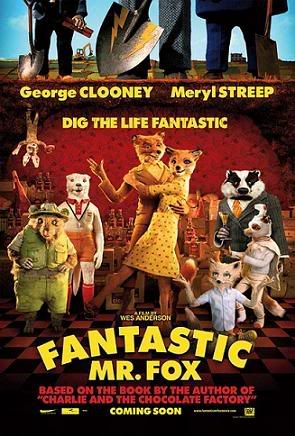
Fantastic Mr. Fox (Film)


Based on the book by Roahld Dahl, Fantastic Mr. Fox is Wes Anderson's first foray into animation--and what a beatific foray it is. Using painstaking stop motion animation and breathtaking dioramas, Anderson has brought Dahl's quirky and colorful landscape to life.

Mr. Fox is the most successful thief around until he hangs up his criminal hat to get married. But when Mr. and Mrs. Fox move house, Mr. Fox is tempted to a life of crime once again by the proximity of the meanest and richest farmers in the county--Boggis, Bunce, and Bean. Mr. Fox starts stealing again, but once the farmers find out war ensues.

This could easily be simply a children's film, but the beauty is that it isn't just that. While kids are sure to enjoy it, it works on all levels. It's one of those rare, off-beat, delightful films which offers something for everyone. Anderson never loses sight of the fact that he's adapting a children's story which allows latitude for silly and fun elements; nor does he let goofiness override the smart dialogue or direction. Crucial to the success of the film is the humor, which includes slapstick and physical humor, as well as sarcasm and deadpan one-liners. It's never over the top and never amiss.

The visual style is scruffy and endearing, and where would it be without an excellent cast? George Clooney is stellar as Mr. Fox, as is Meryl Streep as Mrs. Fox. The highlight performance, though, is Jason Schwartzman as Mr. and Mrs. Fox's son, a disaffected cape-wearing youth cub. other performances are solid and appropriate for such a charming cast of side characters. The music is a spare country soundtrack which completes the film.

All in all this is a splendid, unconventional treat and showcases Anderson's greatest abilities yet.

-elln

Saturday, November 28, 2009

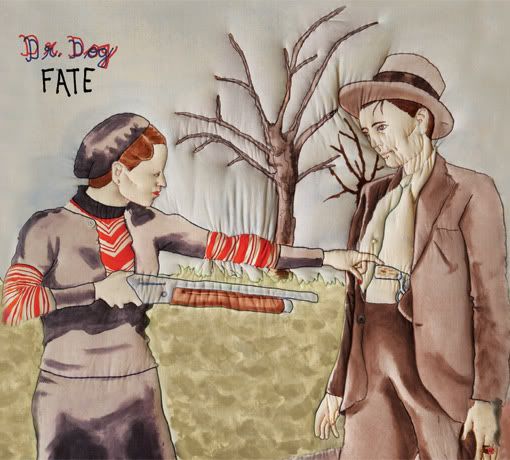
Dr. Dog's FATE


Philadelphia natives (and yes, I have seen them live), Dr. Dog have slowly and steadily been making a reputation with mellow, lo-fi "indie" rock for years. Well, it might be labeled as indie rock but that's just because it's too complicated to say they're psychedelic blues rock meets classic '60's pop. "The Breeze" isn't the most overwhelming album opener, but it sets the mellow tone the album will maintain and uses some interesting flute instrumentation near the end. "Hang On" introduces the bluesy tone and smattering of country which will dominate the album, including some well-placed harmonica work and gospel vocals. It also sports some of the best content lyrically: "and what you thought was a hurricane was just the rustling of the wind/why do you think we need amazing grace just to tell it like it is?/ oh I don't need no doctor to tear me all apart/I just need you to mend my heart."

"Old Days" is another album highlight, with snare drums layered over by far-off vocals, shakers, and other strange percussion, supplemented by a piano hook in a fuzzy psychedlic folk fusion. It's astounding how much they achieve without traditional instrumentation. "Army of Ancients" is for the true blues-lover tinged with some NRBQ-esque jazz. "The Rabbit, the Bat, and the Reindeer" is the catchiest song on the album, a piece of excellent piano-driven druggie pop, while "The Ark" is a close second and the darkest song on the album in tone. It opens with mean, driving guitars which demand your attention, and again that military snare; the lyrics are also some of the best of the album: "God, he called for rain/so I built an ark but no rain came/I was ashamed...Love, she asked for more/but what I gave only made her poor." This is the only real rock on the album, but it shines beautifully and it's much rawer than the other tracks.

"From" is a relaxed, trippy love ballad, appreciable for its slow build and rooted in folklore lyrics. Lyrically the album is superior as it strays from the beaten path to express love and friendship in unconventional ways, works with random images like trains and trees, and delves into folklore, large thematic concepts, and even biblical references. This strength is particularly evident in "100 Years," which explores mortality and slavery in a tall tale manner: "About 100 years from now I'm going to marry you out of common sense/and get out from behind this plow."

"Uncovering the Old" is a solid album contribution, but not particularly remarkable compared to earlier tracks. "The Beach" comes closest to the sharp guitars and attitude of "The [brilliant] Ark," and sports the lyrics from which came the album title. Album closer "My Friend" cleverly weaves together the whole album, starting with a country-tinged opener and using themes from all the songs, or refering lyrics from the other tracks. It ends perfectly with the sound of a train pulling away. This is an album which took a while to grow on me, but it will stay with me the rest of my life. Highly recommended for all ages.

-elln


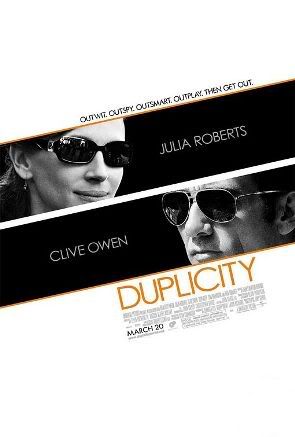
Duplicity


Famed director Tony Gilroy's latest effort, Duplicity, is a mixed bag. Clive Owen is Ray and Julia Roberts is Clare, and they are MI6 and CIA agents respectively. After two one-night stands they team up to extract themselves from their agencies and go private, intent on swindling both sides out of millions of dollars to set themselves up for the rest of their lives. So they sign on with a private corporate group intent on stealing the formula to a rival's new product--but the question is who is playing who?

The main draw of this film is how paranoid it makes you. Really. When the two leads constantly question each other, nervous that the other will take off with all the funds, the audience is constantly running through the maze wondering who is on whose side. The slick filming and direction may set the tone for this quirky, offbeat spy movie, but the plot gets a bit too convoluted to follow, and lacks a big reveal which should be a payoff for the audience. It's still engaging, however, as is the dialogue between the two leads--or what little there is of it--minus the one embarrassingly mushy love confession. Most of their relationship is sexual, but since it's a spy movie, whatever.

The film does suffer, at times, from info-dumping, which doesn't come off quite as eloquently as it did, in, say, something like Oceans 11. As Dick's team explained all their intricate little spy tricks to him I was rolling my eyes.

The callousness and scheming of corporate america is totally trashed here (I approve!), and Paul Giamatti is brilliant in his portrayal of egotistic, maniacal corporate executive Dick Garsik. In fact most of the cast is stellar. The movie has a notably good soundtrack, with a lot of Spanish-sounding tracks to empahsize the sexiness of it all. The characters themselves might not be particularly complex, the plot might be too complicated at times, but the fun is all in navigating the labyrinth of who is using who, and the heart-pumping action is thrilling. Even if the ending was a bit lackluster, I enjoyed the very last scene immensely, and was glad to have good old Clare and Ray back from their hiatus as fast-talking spies instead of people-who-make-really-trite-and-hackneyed-love-speeches.

-elln

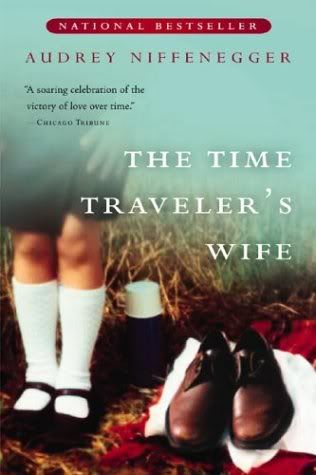
Audrey Niffenegger's THE TIME TRAVELER'S WIFE


Okay, I'm off hiatus and back to reviewing.

If you'll recall I went to see the movie when it came out a few months ago, so I decided to read the book that's made such a splash. First, the concept is a clever one. Henry DeTamble is afflicted by a genetic disorder which causes him to time travel spontaneously. This isn't some magical gift, but rather a curse which plagues his life, causing him to end up in dangerous situations and to learn things about the future he would never normally know.
His wife, Clare, has known him since she was six years old because an older version of Henry traveled to the past to see her. Meanwhile, Henry meets Clare for the first time in his own timeline when he is twenty-eight. Thus begins their harrowing love story.

And this is a love story, a good one. Told in present tense, first-person narrative, it tries to get as close to the reader as can be. The sentences are direct, simple, and cutting; the characters are complex. Niffenegger's strength seems to be her unrelenting brutal and harsh portrayal of the realities of life. Even though her premise is fantastical, an ability which we would at first glance believe a blessing, she treats with eagle eye precision as an almost life-threatening illness. Clare and Henry are so in love, yet face so many troubles. Of course the title is revealing; this isn't about a woman coming into her own (a woman who is already fiercely independent), but rather about a steadfast love. By making Clare a possession of Henry in the title, Niffenegger has already relegated her to that "waiting" position she maintains throughout the book.

Despite its realistic and complex look at a single relationship, the book does have its faults. Chief among these is its diminished emotional impact. Sure, at the end I did feel that a some great saga had come to an end, but I wasn't exactly teary-eyed. This is mostly because Clare and Henry are unapologetically selfish characters. They mourn their plight, they both injure other lovers unrepentantly, they decide that they need one another despite the consequences. Perhaps these are realistic human traits-but there isn't much to ingratiate you to either character, both of whom seem to run around in circles throughout the book even as their relationship with one another changes.

The book has plenty of strengths. Its length may have been excessive, but Niffeneger pulls off the intersecting, jumping timeline structure quite well. She uses it for shocking revelations late in the book and a few excellent plot twists. And secondary to the romance of Clare and Henry is an exploration of family. Clare's family, with its dysfunctionality swept neatly under the rug and surfacing during high-tension family affairs with the aid of inebriation, rings painfully true. Developments in the Ingrid and Henry storyline, mirrored by the Gomez and Clare storyline, are a treat for the reader and often provide more insight into the two protagonists than many of their own interactions do. This is a mature and cathartic read, and it succeeds in being epic even if it does fail to rake us across the coals in an emotional sense.

-elln

Friday, November 20, 2009

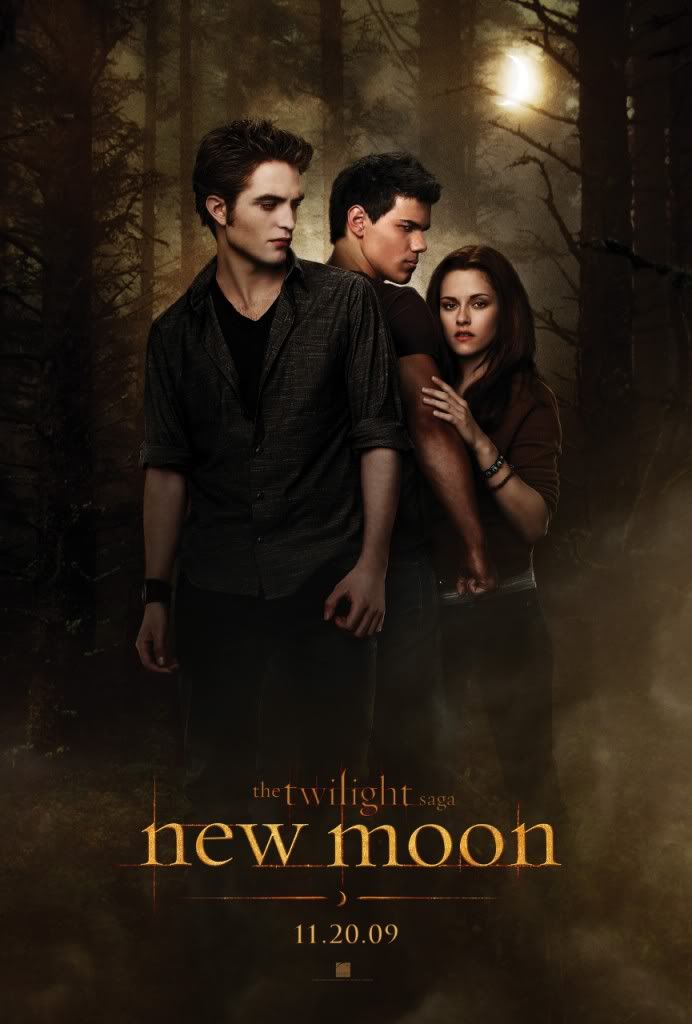
New Moon (movie)


An adaptation of the second installment in Stephanie Meyer's Twilight saga, New Moon is definitely an improvement over the first film. In fact, it's an improvement over the book as well. Why? A couple reasons, including the fact that the plot contrivances are far less obvious in the movies.

The basic idea is that Bella Swan (Kristen Stewart) and Edward Cullen (Robert Pattinson) are In Love except that Edward is torn between loving Bella and wanting to suck her blood, seeing that he's a vampire and all. Too bad in the first movie Edward had as much character as a piece of cardboard, especially in the scenes when he isn't staring at Bella completely freaked out.

New Moon itself is a faithful adaptation of the novel, so most of its plot and character problems come from the books themselves. The movie is a solid piece of entertainment, blending tortured romance with slice-of-life with action and supernatural elements--throw in some dark and deadpan humor and you've got it made. The soundtrack is good, the direction is excellent (except for the plethora of close-up face shots which made me feel like the characters were breathing on me), and the art direction is luscious. Watching all those wonderfully dark, beautiful characters on screen is a treat. But the strength of New Moon versus Twilight comes in the absence of one of Twilight's leads and the insertion of secondary character Jacob (Taylor Lautner) as the third side of the love triangle.

What Twilight failed to realize is that (especially aimed at a female audience) lack of dialogue between the two mains leads CANNOT be made up with by pans of Edward and Bella lying in fields, holding hands, and climbing trees. There is no replacement for good dialogue, and it was missing in Twilight. As a result, Edward became inaccessible to the viewer. Not so the case with Jacob. New Moon's script is ten times better than Twilight's and allows for light-hearted and more serious banter between Jacob and Bella; Jacob is a lovable hunk of muscle and a stark contrast to Edward. So in terms of character development New Moon is vastly more satisfying than the first installment of the series.

The only notable disappointment between first and second movie is the lack of screen time for the Cullen clan, a cast of characters who are almost as fun to watch as Edward is dull. And there were a couple poor directing decisions, such as the ridiculous scene where Jacob fumbles around with a motor bike instead of rushing to wounded Bella, and then takes off his shirt to wipe her small head wound. Tell me they weren't thinking about the teenage audience. Also look out for Dakota Fanning all grown-up and playing sadistic vampiress Jane, a high-ranking member of the Volturi.

Plot has never been a problem in the saga, although when examined with a critical eye all the contrivances become apparent. Case in point: Bella's one friend, once Edward leaves, just happens to turn into a werewolf. In movie form, however, it's easier to dismiss these contrivances because of the flair and suspense with which the film is directed. On a personal note, I'm starting to wish Stephanie Meyer had just left the whole werewolf subplot out of it. Vampire politics are fascinating, at least in the movies, in and of themselves; and Jacob as a normal human provided a much more interesting dilemma for Bella. It would crystallize her problem--a happy, mortal life with Jacob, or an immortal and happy life with Edward? It seems like the question would have a simple answer, but immortality messes with the natural order of things, the soul, etc. This dilemma is much more substantial and interesting than the whole werewolves vs. vampires subplot.

As a whole the movie is better than both its book counterpart and the first installment of the series, mostly due to an improved script and a lovable third side of the love triangle.

-elln

Monday, October 19, 2009

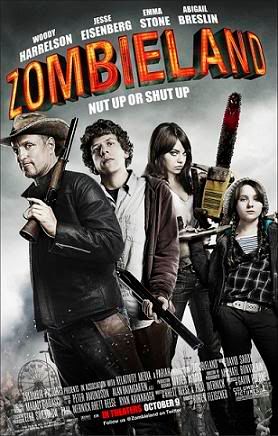
Zombieland


Yet another movie about Zombies, right? WRONG. Everything about this movie should have gone down the wrong way with me: I hate horror, I'm not a huge fan of gratuitous gore, and I'm not especially fond of the undead. But given the cast of tastefully-known but not big name actors, I was curious to see where this movie went.

A movie from director Ruben Fleischer, Zombieland’s premise isn’t exactly original. Most of the world has been stricken by a virus transmitted via biting, and it turns people into zombies, or rabid cannibals with little capacity for reasoning. Columbus (Jesse Eisenberg, Adventureland) is one of the few survivors, due mainly to following an anal-retentive list of rules he never breaks (#1 Cardio, #2 Beware Bathrooms, etc). Trying to make it home to Ohio, he teams up with outlaw zombie-slayer killing machine Tallahassee (Woody Harrelson, No Country for Old Men), and eventually Wichita (Emma Stone, Superbad) and Little Rock (Abigail Breslin, Little Miss Sunshine).

But the clichéd premise doesn’t matter because the execution is brilliant. First things first, Zombieland is hysterical. It certainly knows how to use its grossness for ick-factor moments, but most of the comedy comes from the characters themselves. The cast is a pleasantly star-studded but off the radar group, and the acting is top-notch, with Harrelson stealing the show as lunatic Tallahassee. The comedy is disgusting at times, and appropriately morbid, but never misses the mark; there are even throwbacks to Deliverance and Ghost Busters.

At the same time, there are moments of genuine suspense in the vein of an action film as opposed to a horror film. A heart-thumping confrontation near the film’s conclusion involving heavy weaponry on a roller coaster is possibly one of the craziest shoot-outs ever directed. There are also genuinely heart-warming moments in the film, although towards the end of the film the sap is played up a little too much. The soundtrack is for lovers of indie and classic rock, sporting songs by Sea Wolf, Band of Horses, and Blue Oyster Cult.

The characters are all genuinely likable people and sufficient time is spent on their respective back stories. All around the movie’s a winning combination with a good mix of humor, action, and character development, topped off by stellar direction, cinematography, and clever script-writing. If you can get past the gross factor (or maybe you enjoy it) there’s a genuinely entertaining story here. So yeah, it's all been done before--but rarely this outrageously or awesomely.
-elln

Monday, October 5, 2009

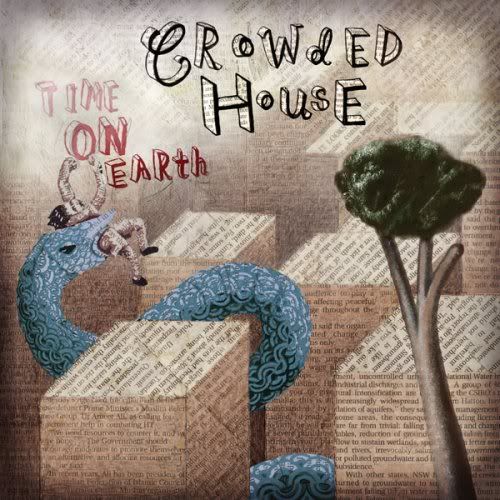
Crowded House's TIME ON EARTH


Power Aussie rockers Crowded House haven't produced anything this good since their streak in the eighties. Time on Earth is a moving piece of work, helped by guests like the incredibly talented, prolific Johnny Marr (fan!) and the Dixie Chicks (not a fan). And it's an album largely haunted by drummer Paul Hester's suicide.

The album's tone is set by the floating, slow, dreamy opener of "Nobody Wants To." Neil Finn's voice is crooning, and while the song is tinged with country it's well-crafted lo-fi rock. Their sound has certainly gotten smoother, slower, and has done away with the new wave/glam tinge altogether. "Don't Stop Now" is simply a continuation of the sleek rock of the album opener, with a sufficiently-built chorus and Finn's distant but simple and piercing vocals. "She Called Up" is the album's first upbeat offering, and it's catchy but not really my style as its country influence is a bit too obvious. The bridge is definitely funky, calling to mind the disjointed chords of bands like Silverchair, but I wouldn't call this an album highlight.

"Say That Again" is another solid offering of melancholy Sunday-morning rock, like a less brash, more sophisticated Goo Goo Dolls. This haunting piece is probably the album's strongest point until the next track, "Pour Le Monde," in which Finn really capitalizes on the piano that was hinted at in the opening track. This piano-driven piece highlights Finn's basic but poetic and touching skill with lyrics, and while the orchestrated backing is this close to being sappy the piece is crafted well enough to avoid that pitfall.

"Even a Child"is Marr's contribution to the album and begins the string of really strong tracks. Integral is Marr's catchy guitar-work; here the country twinge works. "Heaven That I'm Making"is more experimental than prior album songs and isn't the strongest effort on the album; "A Sigh" is a Doves-like lush effort backed by tremoring violins and well-placed orchestral arrangements. "Silent House" (surprisingly co-written by the Dixie Chicks) is an album highlight with a smart buildup to the payoff of a melancholy, gorgeous reflection on a dead friend. Finn even inserts small bagpipe sections, demonstrating that while he knows how to play it safe, he steps outside the box enough to prove his musicianship.

"English Trees" is another album highlight, harking back to the earlier smooth rock at the album's start but even more mellowed out. "Walked Her Way Down" is the jazziest track on the album, with extra points for singable-alongable-ness, while "Transit Lounge" can veritably be called clever in both execution and subject matter, with its self-deprecation and frankness and layering of snippets of language and a nice performance by a female vocalist.

"You Are the One to Make Me Cry" seems to realize that the album is winding down, and builds an air of nostalgia using, once again, violin. Once again, one of the impressive aspects of Finn's work is how easily he incorporates a variety of instruments into his arrangements with ease so that they're effective but unobtrusive. "People Are Like Suns" is almost Keane-ish, with a slow and lovely piano arrangement and haunting, melancholy vocals (which the whole album is shot through with). This is what a good rock album should sound like; it avoids all the cliched pitfalls of the genre. Time on Earth is solid, thought-provoking, simplistic and lovely through-and-through.

-elln

Sunday, October 4, 2009

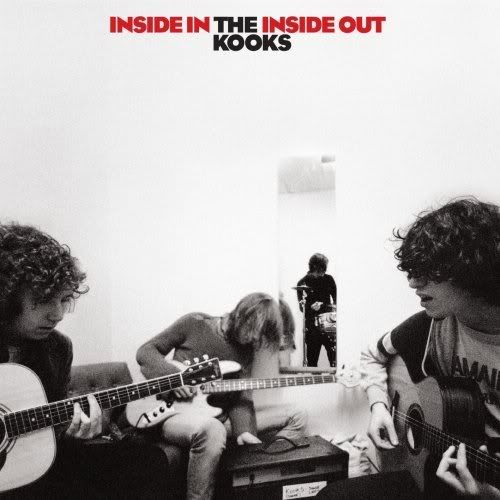
The Kooks' INSIDE IN/INSIDE OUT


It's ironic that the Kooks took their name from a David Bowie song considering how little they have in common with glam rock aside from occasional yowling vocals. No, these English indie rockers have a unique spin on the acoustic and alternative scene which renders their sound distinguishable from the beginning. Inside In/Inside Out is a gem of a first album, and starts out unconventionally with one of the catchiest and lo-fi tunes on the album, "Seaside." A soulful acoustic piece, "Seaside" lasts one minute and forty seconds, and is followed by the song one would think would be the opener, "See the World." The second track is when we first hear the upbeat, buzzy, piercing guitars which are the Kooks' signature from here on out, and while it's not the strongest song on the album, it's a solid start.
"Sofa Song" was released as a single before the album, and sports Luke Pritchard singing in a lower register than we've heard yet before launching into more yowling--albeit controlled yowling. What makes the Kooks so interesting is their raw garage-rock style smoothed over and polished into cystallized indie rock and tight chords. "Sofa Song" starts a slew of singles, and next up is the short and sweet "Eddie's Gun," highlighting the masterful use of harmony which is another Kooks trademark.
"Ooh La" is an album highlight where the Kooks back off on the unrelenting suniness of previous tracks and melancholy pervades this still-catchy, still-commercial song. It's not like the Kooks' subject matter is original, but the way it's written is brilliant enough and relatable enough that, sticking to their style, they really can't go wrong.
There's not much to say about "You Don't Love Me" other than that it's another solid, if not particularly strong, addition to the album. "She Moves in Her Own Way," however, is a nice relief from power-driven guitar hooks and lets the listener breathe at the perfect time with its laid-back approach to a loving relationship and lazy, sunny days.
"Matchbox" marks a lyrical change in the album to the more sophisticated, and shifts musical themes pleasurably, becoming one of the surprise album highlights, especially the catchy refrain. "Naive" is yet another album highlight in the vein of the slightly less raw, more polished second half of the album, while "I Want You Back" returns to direct, less-pleasing lyrics and misses a catchy hook by a hair's breadth. "If Only" is a punk take on alt-rock, short with simple guitar chords but a surprisingly upbeat chorus; "Jackie Big Tits" is a testament to the band's immaturity. The song itself is good, and is a return to the mellow sound of some early tracks, in particular "She Moves"; however, the title (and chorus) is unfortunate and prevents the song from being taken seriously.
"Time Awaits" opens with a markedly bluesy acoustic guitar before launching into traditional Kooks sound--at this point what the album lacks markedly is greater variety in sound; on the other hand, the Kooks have such an enigmatic sound going that the begged question is whether or not experimentation will deliver for fans on following albums. The Kooks end their album quietly, just as they began it. "Got No Love" is as close as the Kooks get to reflective, and it works. For such a fiery first album, the choice to open and close with melancholy tracks is interesting, but it does offer a sense of closure.
-elln

Monday, September 7, 2009

Jane Yolen's THE PIT DRAGON CHRONICLES


I wish Jane Yolen wrote more books like this. In fact, I wish she wrote books like this for an older audience. If you didn't read the first three in your younger years, it might be hard to appreciate her first installment after three decades, and the final book in the quartet (yes, it's a quartet; it was meant to be a trilogy, but Yolen finally concluded the series this year with a fourth book). Dragon's Blood, Heart's Blood, and A Sending of Dragons were all written in the 1980's, and Dragon's Heart was released in 2009.

For young adult books, the politics of Penal Colony planet Austar IV get progressively sophisticated as the series continues. All the books follow the endeavors of Jakkin Stewart, a bonder working on the dragon farm of Master Sarkkhan. As arid and desert-like as Austar is, one of its major industries is dragon breeding for stews, pets, and pit fighting. In Dragon's Blood, Jakkin is unusually ambitious for a bonder, and wants to throw off the yoke of mastery by raising his own dragon; thus, when a brood is miscounted he steals away a baby dragon and begins to raise it on his own in the desert by night. Aiding him is the beautiful and mysterious Akki, the daughter of Sarkkhan; she disappears at the end of the novel, having gone to the City for unknown reasons.

In Heart's Blood, Jakkin has found success with the up-and-coming Heart's Blood, and takes her to several fights in the Rokk Major stadium; he's even won the support of the genial Master Sarkkhan, who appreciates Jakkin's drive and ambition and has given him his freedom. However, he's plunged into a world of dangerous politics when he's sent on a mission to infiltrate a rebel cell to help Akki. A struggle has begun between the ancestors of convicts (anyone with a double k in his or her name) and the wealthy feders, or off-worlders. The story ends with Heart's Blood having given birth to five hatchlings, and tragedy.

A Sending of Dragons is the strangest novel in the bunch, and chronicles the year that Jakkin, Akki, and Heart's Blood's brood spend hiding in the mountains after the disaster at the end of the last book, with their new gift of "sight," or the ability to communicate directly with dragons. They spend much of it fighting the trogs, an ancient race of people who are mute, brutish, and who inhabit the mountain and engage in dragon sacrifice to aquire their mysterious telepathic power. At the end of the novel, Jakkin and Akki are rescued and must return to civilization, hiding their dangerous new gift from everyone.

And finally, after more than ten years, a conclusion.
In Dragon's Heart, Akki makes it her mission to find a way to give everyone dragon sight without dragon slaughter; if the secret is revealed before then, the entire planet's dragon population will be endangered. Meanwhile, both Jakkin and Akki have once again been recruited by Senator Golden, the duplicitous man who had them infiltrate a rebel cell and caused them to unknowingly commit an act of terrorism.

On the whole, these books stand entirely separate from one another. Dragon's Blood is purely adventurous and blood-pumping, while Heart's Blood is the most tragic and confusing. and the end divides childhood and adulthood for both the protagonists. A Sending of Dragons is a surreal survival experience, and seems to take place on a different planet, but it certainly sets things up for the final book in which the reader feels a definite kinship with Jakkin and Akki for all of the strange things they've gone through. Dragon's Heart is the most politically-charged, and wanders into thriller territory at times; in that sense, it's more mature and also slightly disappointing. A return to the brilliant optimisn and straight-forwardness of first love and first fight of book one would have been more welcome. And after the striking realism of all four books, the ending feels empty.

These flaws are minor in the context of four of the best young adult fantasy/sci-fi novels out there. The details of Yolen's world are so simple, but so evocative. The bonder system, a history defined by crime and by names, and political strife all create a vivid world-which is the best part of the series.


-elln

Sunday, September 6, 2009

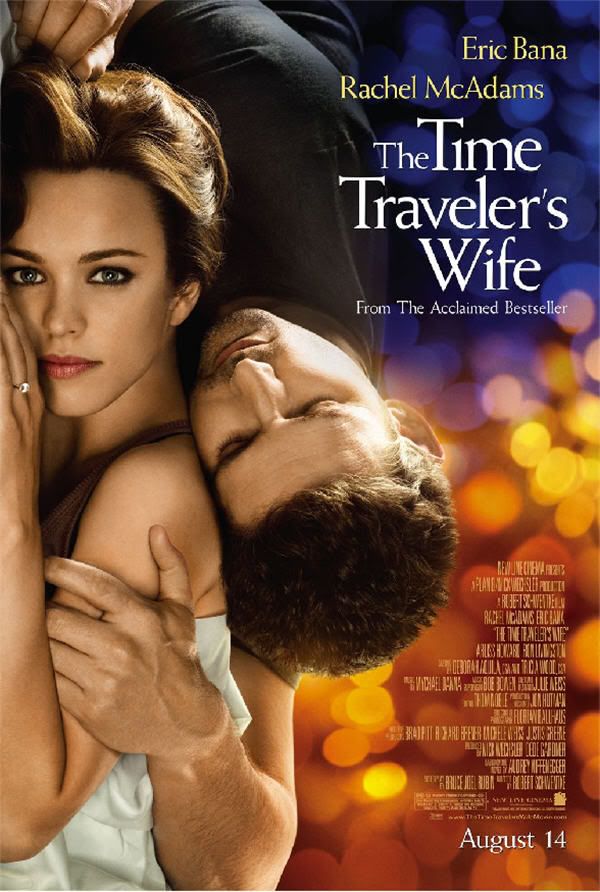
The Time Traveler's Wife (movie)


Henry (Eric Bana) has a genetic disorder which allows him to time travel spontaneously, arriving naked in whatever random destination he might find himself, although more often than not he intersects with his own life. Clare (Rachel McAdams) has been in love with Henry since girlhood, when he visited her from the future. And thus begins the circular question I was asking myself after the movie, and which the movie itself poses--who met whom first? Clare met an older version of Henry as a small girl, but the younger version of Henry meets Clare having no idea that he will meet her in his future, and her past. Thus it is that Clare accuses Henry at one point of having trapped her into loving him because he goes to the past (not on purpose) and imprints himself on her mind when she's a susceptible young girl.

With a brilliant premise, the movie has lots of great moments-and lots of flaws as well, the foremost among them being logic problems. Example: if Henry isn't allowed to interefere with the past, or the future, how is he able to obtain the winning lotto ticket which makes Clare and him millionaires? He can't bring things with him when he travels, so he shouldn't have been able to bring the ticket back with him. The only plausible explanation is that he found out where the ticket was bought, and purchased it in his own time the day of. Which doesn't make sense either because he's not supposed to alter the flow of events. But whatever.

The other major complaint I have is the utterly ridiculous CG caribou. I mean, it was clearly not a real caribou, so it looked really stupid and out of place. Why not just change it to a deer or something, and use a real animal in the filming?

But now on to the good points, which mostly outweigh the bad. The acting-really good (especially from scene-stealers Hailey McCann as Alba DeTamble, and Arliss Howard as Richard DeTamble). The characters-really good. Both leads are enigmatic people, but clearly troubled. McAdams' portrayal of Clare was a little stiff at times, but it did serve to get across her bohemian ice queen image. And while there were narrative problems, most of the logic makes sense when you reflect on it. A word of caution: if you are not a sap and a romantic, you will probably not like this movie. Director Robert Schwentke pours it on almost as thick as The Notebook, and betimes yanks maybe a little too hard on those heartstrings. However, it successfully reiterates the message we all love to believe--that love conquers all, space and time, etc., and in the end it's quite easy to sympathize with the character the movie is titled for--Clare herself. I found it to be a satisfactory romance, drama, and character study with sufficiently-developed characters and lovely cinematography.

-elln

Tuesday, August 25, 2009

Reviews Suck


Our country’s fascination with the prep subculture is ubiquitous and at times unsettling. Shows like Gossip Girl and NYC Prep document the lives of the entitled and the clueless. This phenomenon carries over into books, the literary (?) equivalent of Gossip Girl and the Clique Series (the poor-man’s Gossip Girl) are quite popular as well.

Now enter Everything Sucks. Written in the vein of Prep, Everything Sucks (subtitled: Losing My Mind and Finding Myself in a High School Quest for Cool) denounces prep school life in memoir form.

Hannah Friedman gives us a highly candid look at her life at a New York private school. The daughter of one-hit wonder, Dean Friedman and a monkey-obsessed, paranoid mother, Hannah spends her childhood and preteen years in the shadow of the family’s beloved pet monkey, Amelia. She suffers humiliation at school in the form of bra stuffing gone awry and some unfortunate fashion missteps, such as wearing a bindi to school. Soon, it becomes all too much for Hannah and she enrolls in a private school on scholarship.

Determined to fit in, Hannah makes friends with the In-Crowd, who are called the Great Eight. The Great Eight are like the Plastics, but with a seven (plus) figure trust fund. They could get together with the Heathers for a good game of croquet and could tangle with the aforementioned Plastics any day of the week. Their leader, Cashmere, disregards price tags and throws a fit at her sweet sixteen when given size 6 jeans.

Little by little Hannah becomes acquainted with the intricacies of Queen Bee-dom. She dresses the part, eats as little as possible, and ridicules the less popular. Hannah feels on top of the world for a good while. She enjoys a relationship with Adam, a rich upperclassman who has a bit of a pot problem and a chip on his shoulder. But, soon things begin to spiral out of control. She develops an “overreliance” on Adderall, cocaine, and purging.

Things come to a head for Hannah when college application season comes. The students become even more cutthroat and she writes a cathartic essay that is published in Newsweek about her experience in the application process.

In general, Hannah’s story is something that will be very familiar to many teenage girls, regardless of income or region. It is about one girl’s strong need to fit in with her peers and how far she was willing to go to achieve it. As a teenage girl I found myself cringing with her at the familiar moments of angst and embarrassment. However, there were moments when I wanted to personally tell her that these people were not worth anything that she put herself through.

Despite her fear of freakdom, Hannah Friedman gives us an honest account of how much prep school can suck.


-Acerbec

Friday, July 31, 2009

Elln's Top Ten July '09


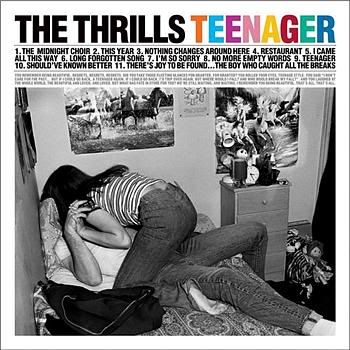
Well, it was tough this week because Dashboard's The Shade of Poison Trees cover is very pleasing to the eye. But I think The Thrill's Teenager cover is so classic, I couldn't resist. So there it is in all its honest, hormone-crazed glory.


1. "Modern Love"/David Bowie-Admittedly, I've never been a huge Bowie fan, but I've been listening to the Adventureland soundtrack a lot lately. His glam rock is powerfully addictive and sort of commercial, while also being musically clever, respectable, and viable. He also incorporates jazz into his rock, evidenced by the saxophones. His lyrics are nonsensical, but somehow make sense. So what I'm saying is that he's essentially a walking, singing paradox. Yeah, I dig those.

2. "Ain't No Rest for the Wicked"/Cage the Elephant-Ah, thank you, something straight-forward. While Cage the Elephant betrays southern roots here with a little country and folk twang, this song is purely mesmerizing rock and roll. The saga-like story-telling lyrics are all folk, but the acoustic guitar hook is 100% clever, polished rock.

3. "Don't Dream It's Over"/Crowded House-Another gem from the Adventureland soundtrack, Crowded House sounds like a band that was an '80's one-hit-wonder, though they actually went platinum in their native Australia for the release of their fifth album, Time on Earth. The song is relaxed with an undeniably mellow, catchy hook, and a sort of melancholy main-stream appeal--like a pared-down, much shallower version of a Smiths song. Which doesn't make it any less good.

4. "The Midnight Choir"/The Thrills-Teenager, Dublin rockers The Thrills' third album, signifies a break from their usual California-inspired classic surfer music love affair to more morose, carefully crafted alternative stuff. While the California guitars are still there, the vocals have become significantly more stylized. "The Midnight Choir" is surprisingly fast-paced for a song playing with nostalgic sadness, but the odd combination works in interesting ways.

5. "Gold Lion"/Yeah Yeah Yeahs-I'll be the first to admit I've never understood the buzz around the Yeah Yeah Yeahs. Perhaps with time my opinion will differ, but for now "Gold Lion" remains my favorite offering of their range of spare garage rock revival offerings. The rawness of Karen O's vocals and the meanness and simplicity of the guitars make the beat of the song easily accessible so that it becomes, almost against the listener's will, addictive.

6. "Our Lips Are Sealed"/The Go-Go's-Another band I'm not such a fan of, the Go-Go's are undeniably one of the quintessential bands of the '80's, and "Our Lips Are Sealed" makes it apparent why. Using clever and direct arrangement and instrumentation, the Go-Go's power-pop sound is well-honed and well-crafted for easy listening.

7. "Swollen Summer"/The Bravery-Okay, it's one of the dumbest songs ever from an album which is stunningly mediocre. But I still love it. I can't really justify it, except that those siren-like guitars and the lyrics "looks like a swollen summer/what if I'm getting dumber?" have wormed their way into my heart over the years. Hey, I'm allowed a guilty pleasure, aren't I? Besides, it's a perfect summer song to obnoxiously blare out the car windows.

8. "Moment"/Gran Bel Fisher-You have to at least give him credit for not singing about love, drugs, depression, or surfing. Instead, GBF sings about being in the moment, and music. So yeah, not terribly original, but not generic, either. This is pretty standard college rock, but it helps that his voice is smoky and rather sexy, and it has a nice southerny tinge to it.

9. "Diamond Hoo Ha Man"/Supergrass-Supergrass is kind of an interesting band; they're classified as alternative, though they kind of steal superficial genre styles from all over the place. Anyway, this strange gem is a catchy song about a thief...who is either personifying his diamonds in an extended metaphor ("I gotta get you in my suitcase"), or is a serial killer putting women in his suitcase after he "love[s] [them] all night long." What I was talking about with the superficiality is that though the guitars are unnaturally heavy and low in the song, the song itself isn't particularly weighty.

10. "Fever Dreams"/Dashboard Confessional-Ah, why can't you put out more delightfully compact pop songs like this, Dashboard? Why do you have to walk the fine line of emodome all the time? This is one of the rare Dashboard songs I actually like, probably because it stays on the acoustic side of things, Chris Carraba manages to sing mostly from the chest and not the nose, and the lyrics are sweet and honest.

-elln

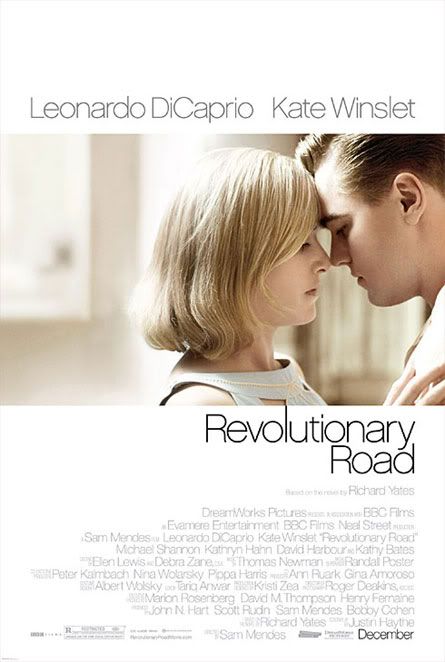
Revolutionary Road (movie)


Frank and April Wheeler are the ideal young couple in 1950's suburbia--bright, vibrant, and convinced that their home on Revolutionary Road isn't permanent. Frank and April's huge argument erupts as a result of that dream shattering, with Frank's dead-end job not exactly lending itself commensurate to his romantic visions of life. April suggests a return to the spirit of youth and spontaneity in the form of a move to Paris, and Frank eventually agrees, but it seems that life and reality have other plans for the couple.

This movie has so many powerhouses behind it, it's hard to imagine a version where it turned out badly. It's directed by Sam Mendes, who did American Beauty which is a gorgeous, gorgeous film; it reunites Mendes' very own wife Kate Winslet with romantic Titanic co-star Leonardo DiCaprio; it's got Kathy Bates; and it's based on one of the greatest triumphs of modern fiction, Richard Yates' novel of the same name.

The direction is a visual feast, and credit must be given to the set designer--I even recognized earthenware my grandmother had from the fifties.

But on to the characters, and the plot, and the writing. The examination of the relationship between Frank and April (and Revolutionary Road) is the key to the entire story; in fact, one reason I had so much trouble relating to them was that I couldn't imagine any normal people who paid so little attention to their children. Most of the time the children didn't exist in the film (probably an authorial and therefore directorial choice to lend more focus to the leads--but it's still incredibly jarring that the children appear briefly, and only when it's convenient).

The film got its point across very cleanly, and the tragedy was unpredictable without knowing the source material. Frank was relatable as a character until he sold out for security; unfortunately, April's character was chilly at best, although by the end she had somehow become the most sympathetic. This movie is an odd creature in that it brings you so incredibly close to two human beings, yet a connection is still difficult to establish. You can only sit there, wishing you could change things for the better, hoping you can knock some sense into these people as Helen Givings' (Kathy Bates) lunatic son tries to do (played in a stunning performance by Michael Shannon). And while Winslet and DiCaprio's performances are central to the film, the tremendous talent of the supporting cast truly evens out the tone of the film.

Unfortunately for us, tragedy is inevitable, and in an ironic twist of fate it's no longer Frank we sympathize with, but April. And while it may be enlightening and gruesome to watch the drama unfold, I have to question how much of a ring of truth some of it felt. Aside from the children not existing, a lot of the explosive fights had dialogue that felt a touch histrionic, with many "Oh God, April,"s, and "Jesus, Frank"s. Sometimes this was even enough to distract from the scene when I had to ask myself Would this really happen? Would someone just come out and say that? A brilliant film in the study of the human condition, and phenomenal taken as a whole, Revolutionary Road nonetheless lacks the heart and relatability which make so many other films a success. That doesn't make it any less worth seeing, though. Just don't expect to get too invested.

-elln

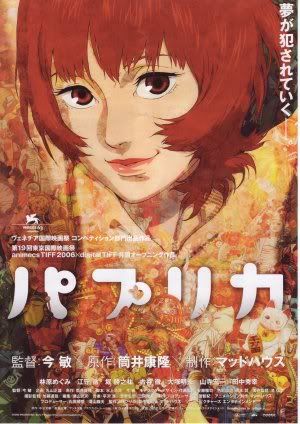
PAPRIKA


If America is the King of Live-Action, then no one can compete with the King of Animation: Japan. If you know anything about film outside of America, that fact should be obvious. And if you follow film here, you may recall a shining gem called Spirited Away which won a 2001 Oscar for Best Animated Feature and is, according to Wikipedia, the highest-grossing film at the box office in Japan ever.

Don't worry, all of this has a point. Because you see, the director of Spirited Away may be the only widely-known anime director in America, and the term "widely-known" is optimistic. The man who should also be acknowledged is Satoshi Kon, who has made everything from the R-rated Perfect Blue to the family-friendly Tokyo Godfathers.

Paprika came out in 2006 to relative laudation and notoriety here in the states, as it well should have been. The movie is a visual masterpiece, with its story bested only by its artistic direction. Kon is the master of confusing dreams and reality, and this movie is written to give him the best excuse he's ever had to show off that particular talent.

A new device called the DC Mini has been developed in the near-future, and it allows people to record, play back, and even enter, other people's dreams. Developed by Dr. Kosaku Tokita, an immature genius whose incredibly obese body houses the mind of a child, his associate Dr. Atsuko Chiba hopes to use the device to treat her patient's psychological illnesses. The device is controversial, however, as the hospital director believes it's a dangerous invasion of privacy. All hell breaks loose, however, when the device is stolen while it's in the development stage and before it's legal. Suddenly, acts of terrorism by the thief via the DC Mini begin to break down the walls between reality and dreams, and it's up to Dr. Chiba and her dream alter-ego, Paprika, to stop the collision.

The visuals are done by Madhouse Studios and they're a sumptuous feast for the eyes; the opening credits sequence is especially clever. The plot itself isn't that complicated; it's the progression of events and the strange sliding of the dreams that keep you unequivocally involved. It's a movie with more width than it has depth, but it has enough depth to make you think about the implications of future technology-both the good and the bad. Most of the time you're so overwhelmed (in a good way) that it's just enough to sit back and enjoy the ride. Although the villain's story regresses from genuine concern over, perhaps, mankind's other final frontier, to a power-trip, the other characters are so full of eccentricities that it's easy to miss his deficiencies. Also, Susumu Hirasawa's music is ethereal and zany.

I haven't seen the sub, although I should see it; however, to get a full experience and focus on the visuals, I would highly recommend the excellent English dub.

If you're a fan of luscious, surreal experiences, thrillers, drama, science-fiction, gorgeous direction, and mind-blowing stories which require an open mind, this is your movie.

-elln

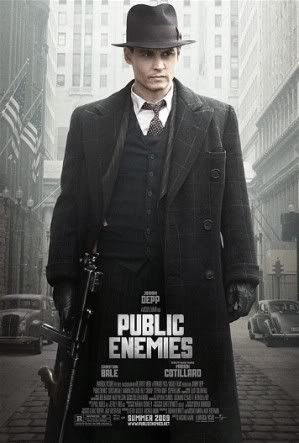
Public Enemies


John Dillinger (Johnny Depp) is America's Most Wanted criminal in the 1930's. A notorious bank robber, his notoriety soon becomes his undoing as crime syndicates begin to see him as a liability and J. Edgar Hoover (Billy Crudup) sends his best agent Melvin Purvis (Christian Bale) in pursuit of Dillinger in a push to establish the FBI.

Enemies is an interesting movie- intense, dark, and racy in atmosphere. Dillinger's fling-turned-love with Billie Frechette (Marion Cotillard) is impulsive and seems poorly developed except that it somehow manages to make its few scenes genuine. Dillinger's character is fascinating. He is portrayed as extremely loyal to friends and family, and he prioritizes public opinion directly after money and Billie. He also totes a gun all the time in the film, but rarely kills anyone, preferring to take hostages over murdering. Speaking of which, on a side note, there is a good one-minute or more spent on a massive gunfight and I've never heard Dolby SurroundSound that loudly. Bad choice on the volume-I was this close to covering my ears.

I'm a Christian Bale fan and he definitely delivered as hard-nosed agent Purvis, blurring the moral lines between the FBI and the criminals they hunt (particularly relevant to the last eight years, eh?). Depp's performance was excellent too- it's always nice to see him outside of his weird roles (such as that awful adaptation of Charlie and the Chocolate Factory). Cotillard was the warmest and most compelling of the bunch, however.

I had two main issues with the film. The first is more minor but nevertheless important: the score. It was inconsistent to the point of eye-rolling when instead of the lovely '30's jazz or folksy bad boy tunes we got sweeping orchestral scores for scenes that didn't really deserve it. Scenes involving Billie were especially susceptible.

The other flaw of the film is that it can't decide (or rather Michael Mann couldn't decide) if it's a hard, gritty take on a real-life infamous public figure, or a throwback to classic gangster movies with all the romanticism and bravado of idealized tragic crime. Still, it makes for an interesting dichotomy, and if you like history, particularly American crime history, and intense character-studies, this is a must-see.

-elln

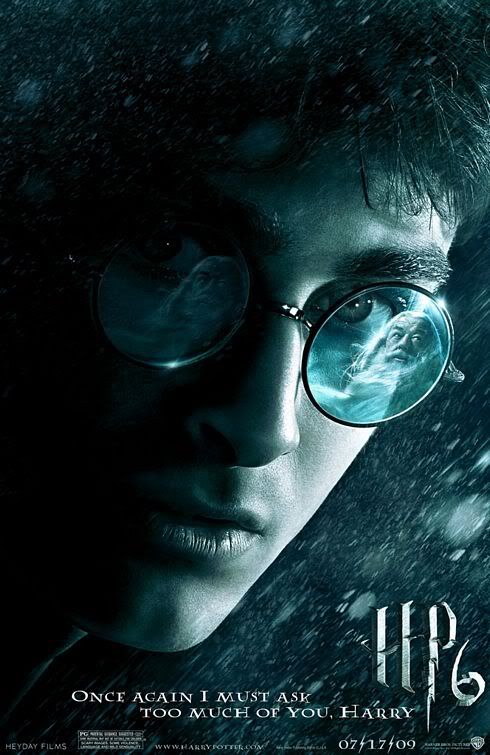
Harry Potter and the Half-Blood Prince (movie)


After the near-travesty of the fourth film and the "business-as-usual" tone of film #5, I went into Half-Blood Prince decidedly apprehensive-and I left it pleasantly surprised.

For those who have been following the movies, a short synopsis: Voldemort has come into the open and Harry is being heralded as The Chosen One. Harry, Hermione, and Ron return to Hogwarts School of Witchcraft and Wizardry amid the chaos of Death Eaters in the open, and Hogwarts is quickly becoming their last oasis. But while hormones are running rampant, Dumbledore has a special mission for Harry: to delve into the past of Tom Riddle a.k.a Lord Voldemort and unravel the secret to defeating him.

I'll first comment on how beautiful the cinematography was. Even book purists shouldn't mind the burrow-burning scene just because of the wheat field film. The arrangment of objects within the frame, the lighting, and the transitions were all spectacular.

On top of that, it helps that the sixth book isn't action-packed until the end. Yates shines as a director when given the time for character development and exploration. Sure, a few key scenes are cut from the plot (most noticeably the Marvolo Gaunt ring backstory, which I expect will be worked into one of the two next films) but the film moves at a much more comfortable pace than its predecessor. It even manages to tackle teenage heart break in a realistic and touching fashion; the Harry Potter movies haven't been this good since The Prisoner of Azkaban. On the other hand the film could have spent less time on Draco Malfoy, and developed the Harry-Ginny relationship past the staring-and-drooling-intensely-at-each-other part. Lastly, I have to say that I miss Richard Harris sorely. Michael Gambon doesn't do it for me.

-elln