Thursday, April 23, 2009

Blade Runner (some thoughts)


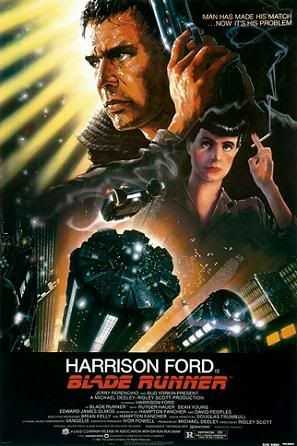
Blade Runner is such a beautiful and controversial film, and so much has been said about it, that I don't have too much left to say. However, since it serves as a model for sci-fi today, there is nothing lost in discussing it.

First, props to the amazing setting and cinematography. The film looks fresh even today (though perhaps that's the result of my watching the Director's Cut), as do the special effects and the creation of humanity's future dystopian society.

Rick Deckard (Harrison Ford) is a blade runner, or an assassin of highly advanced robots called replicants which only have four-year life spans and are illegal on earth. Though he is retired, when four of them come to earth--Zhora, Pris, Roy, and Leon--Deckard is reenlisted to find and "retire" them.

The dystopian world is portrayed beautifully, and the Voight-Kampff tests are especially creepy and effective in breaking down the walls between human and android--because that is the main question the film poses: what exactly does it mean to be human?

Rachel (Sean Young) is the ultimate example of the blurry definition of humanity. She appears and acts human, and it takes 100+ questions in the Voight-Kampff test for Deckard to determine that she is a replicant. There is even room for speculation about whether or not Deckard is a replicant. My one compaint regarding the Rachel-Rick relationship is that though I understand that Rachel didn't know how to express her love, I could have done without the psuedo-rape scene.

The film is rich in depth and complexity as the replicants struggle to sort out their feelings. They are torn between killing to stay alive and feeling sympathetic towards humans; they don't know how to love, and struggle to express it. They question what they are--human or machine--and this confusing transience causes them to lash out in violent and unpredictable ways.

I also appreciated the appropriate characterizations in such a dystopian society; many archetypes are flipped in their heads. Deckard, the hero, is an anti-hero; he's is billed as a hard-boiled cop, but most of the time he's just running for his life and has no clue what to do. Roy, such a great villain because of his creepy unpredictability and complex motivations, does an inexplicably good thing at the end of his life.

The largest problem with the film is the pacing. There are bursts of action followed by long stretches of noir film homage, shady alleys and Ford looking appropriately pensive doing "deep thinking"; after its release, this complaint proved to be the largest, so I don't want to hear adults talking about how "us kids now-a-days don't have no attention span."

Apparently in the original version there were much larger problems, such as voice-overs towards the end explicitly stating Deckard's feelings during the somber final scene, in an attempt to "simplify" and broaden the audience i.e. an Explanation Included For All Those Stupid Americans Because They Obviously Won't Get It, or rather a last-ditch attempt to make the film more popular. There is also a scene included of Rachel and Deckard cruising on a gorgeously sunny road, a sharp and inappropriate contrast to the truly dark end of the tale where Deckard's former blade-running mate, Gaff (who communicates primarily through origami) leaves a paper swan at Deckard's apartment, which can be interpreted two ways--he is letting Deckard flee with Rachel and turning a blind eye, or he is letting Deckard know that he will be following them.

There is so much ambiguity in the film, echoing the cold amorality of the world and of the protagonist, that it's a wonder anything was created that can be taken in so many ways; and therein lies the true beauty of Blade Runner.

-elln

Tuesday, April 14, 2009

Elln's Top Ten April '09


There's a ton of fun stuff in the mix for April and probably a little bit of something for everyone. There's also a tie this month for best album cover. On one hand we've got the wonderfully trippy Peplab Drive cover, and on the other the fantastically sexual Louis XIV's The Best Little Secrets Are Kept (I could have posted the toned-down cover, which basically cuts off the lady's butt...but come on. We all have butts. It's not anything new.)


1. "Beautiful People"/Peplab- this song is purely addictive fun. It's electronic with some sunny guitars and a little latin flavor provided by shakers, not to mention a touch of acid. The refrain is simple and easy with thinly-veiled drug references; this is the perfect song for a day in the sun.

2. "The Way She Said"/Velour-This is pop music at its best. The words may not be amazing, but the rhymes flow so nicely that, well, whatever. The tight rhythms and pared-down melody are catchy-it's a laid-back tune perfect for a lazy day.

3. "Skinny Love"/Bon Iver-There's a special place in my heart for melancholy acoustic folk, but it's hard to reach. Bon Iver does it perfectly here, with sparse instrumentation and words that could be straight from a poem. The effect resonates powerfully.

4. "Staring at the Sun"/TV on the Radio-TVotR is one of the most diverse groups around, so it's hard to pin them as one thing or another. "Staring at the Sun" is a catchy little gem, with their typical howling lyrics, buzzing guitars, and minimalist snare.

5. "Maybe Tomorrow"/Stereophonics-I love Stereophonics to death, but apart from Kelly Jones' vocals nothing in this song is very grungy. Their usual raw power has been exchanged for a much smoother, laid-back, pop-rock sound, and I really dig it. The lyrics are simple but piercing, the way Oasis' lyrics usually are.

6. "Where Is My Mind?"/Pixies-The Pixies are hit-or-miss with me since I don't always enjoy Black Francis' screaming or off-kilter lyrics. But here the Pixies really sound like Radiohead; they open with an acoustic guitar and then add heavy, buzzing guitars. I like the lyrics, too, they're spacey; "Where Is My Mind" could be a modern indie rock song.

7. "When Did Your Heart Go Missing?"/Rooney-they've become very popular very fast, the reason being that Rooney produces addictive throw-back rock. When I first heard this song, I thought it was from the 80's. Anyway, Robert Schwartzman's (he's the guy from The Princess Diaries) LA roots come through very clearly in a song that's less about (shallow) heartbreak and more about an uber-catchy rhythm.

8. "Superstylin'"/Groove Armada- Reggae meets dance-floor electronica in this infectious mix by the masters of such style. Groove Aramada has been around forever, and has been experimenting forever, and they hit the mark more often than not.

9. "Streetlights"/Bloomsday Rising-They'll never be great unless they mature or do something a little more creative, but "Streetlights" is a catchy enough and nice enough rock effort to be worth mentioning (since most mainstream rock sucks now-a-days). I personally think they're too melancholy and should write more upbeat stuff, but the balance of heavy power-chords and Phil Lang's rich vocals which walk the fine line of grating but manage to eke out on the side of pleasant come together nicely.

10. "Paper Doll"/Louis XIV-If you can abide very, very dirty and explicit lyrics (dirtier, in some ways, than rap, which at least gives us the courtesy of euphemisms) then you're in for a real treat. Louis XIV creates absolutely addictive glam rock; they're even one of David Bowie's favorite modern bands.

-elln

Sunday, April 12, 2009

The Kings of Leon's ONLY BY THE NIGHT


It’s true the Kings of Leon have come a long way since the deep Southern rock of debut album Youth and Young Manhood in 2003, and fourth album Only by the Night, released September 2008, showcases all of those changes. The three Followill brothers and their cousin grew up musically sheltered, and have only recently discovered post-punk, arena rock, and alternative rock. These influences live and breathe in Only by the Night.
Opening “Closer” sports an electronic synthesizer reminiscent of psychedelic rock and dream pop, weaving in and out of post-punk inspired guitars. Caleb’s wounded vocals and aimless, melancholy tone come straight from indie rock. It’s also clear that Caleb’s lyricism has become more sophisticated and moved away from Youth and Young Manhood’s raw sexuality and focus on—in a word—women.
“Crawl” comes from the school of British grunge such as Oasis and Blur, with the buzzing guitars of alternative garage rock and an equally swaggering bass line. “Sex on Fire” is pure, polished rock, and the album’s most successful single. “Use Somebody” is possibly the best song on the album, and Caleb’s layered, echoing voice is taken straight from Bono and the arena rockers. “Manhattan” is laid back rock, with a particularly sunny, stirring bass line.
“Revelry” is a true return to Southern rock roots and country, and certainly an album highlight. “17” and “Notion” are continuations of this trend, though less country and more rock with some nice bells added at the opening. “I Want You” returns to alternative sound, placing much less emphasis on guitars and relying much more heavily on drums and bass. “Be Somebody” is a strange little experimental creature, and we finish off with the almost-indie ballad “Cold Desert,” a lyrical masterpiece whose words read like poetry.
One can easily identify the Kings’ influences, but it’s tough to label them like anyone else. They create a masterful blend of rock taken to new places in an era when no one thought it possible.
If rock is going in any direction, this is it.

-elln

Saturday, April 11, 2009

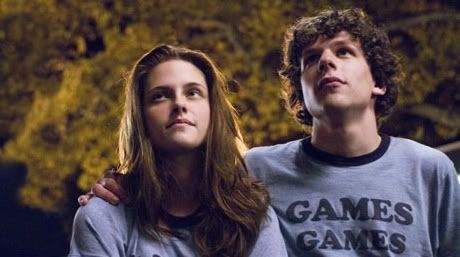
ADVENTURELAND


Imagine Nick & Norah's Infinite Playlist ten times better, and then cross it with American Graffitti and you get Adventureland.

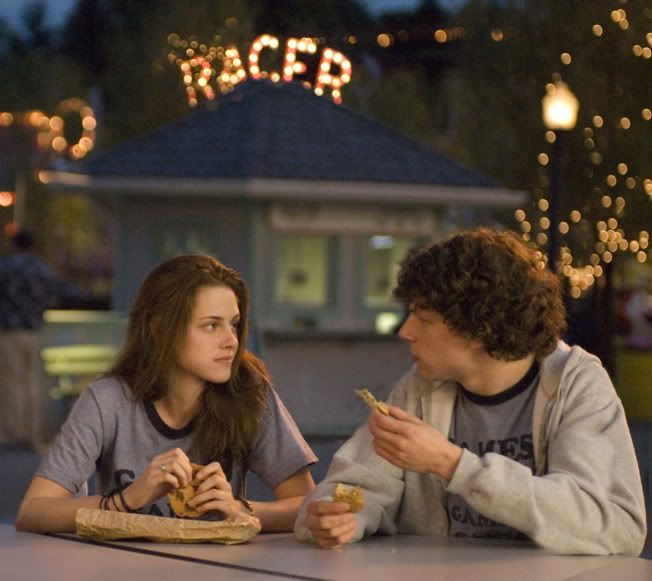
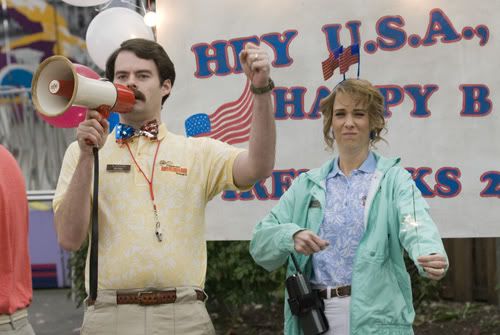
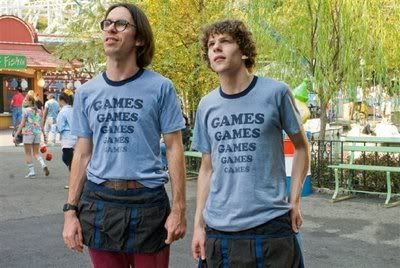
It's the '80's, and James Brennan (Jesse Eisenberg) is off to Columbia grad school in the fall. He's due for a tour of Europe this summer with his yuppie-nerd future roommate when James' father loses his job and James is forced to take a job at the local amusement park in Pittsburgh, Adventureland. His employers are the delightfully bossy and ever-pragmatic Bobby (Bill Hader) and his wife Paulette (Kristen Wiig). James quickly falls in with the cynical Joel (Martin Starr), a Russian literature major, and reluctantly reunites with childhood livewire friend Frigo (Matt Bush). Then fellow employee Em (Kristen Stewart) saves James from a knifing by an angry park-goer, and James' summer takes off as he enter a world of drinking, smoking, and finding true love. But as James is falling for Em, he has no idea that she's sleeping with married maintenance guy Connell (Ryan Reynolds), and notorious flirt Lisa P (Margarita Levieva) may be after James' heart as well.


This movie is so far above and beyond the average romantic comedy that it's hard to describe everything it does right. I'll start with the humor. It's not over-the-top like Superbad, it doesn't try to hammer you over the head, and yet I was laughing out loud more than once. It takes all the typical amusement park tripe (kids throwing up, food being inedible, a running "giant-ass Panda" gag) and breathes life and
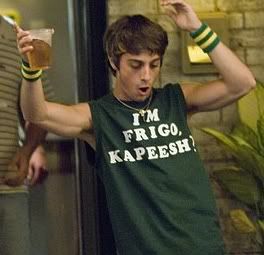
every day humor into them. Then there's snarky deadpan comic timing from Joel, as well as the absolutely insane Frigo's physical comedy antics (like ruining a moment between James and Em by peeing on Em's window from outside). Even the camera angles and composition play to the humor, such as showing Joel's little brother mowing the lawn and then panning to reveal why the mowing is such a problem-it's because Joel and James are trying to have a serious conversation and the lawn is literally 2x2 feet.

Then there's the awesome, awesome soundtrack, featuring songs by Lou Reed/The Velvet Underground, David Bowie, The Cure, The New York Dolls, and original music from alt rockers Yo La Tengo.


What really makes this coming-of-age story shine is how real it is, and the depth of the characters. Em and James aren't the only characters given development. When Joel has his heart broken, we realize that he's not there just to be the dark, gloomy, doomed-to-a-hell-that-is-Pittsburgh comic relief-he's real, and his life sucks. Connell is a Lothario-like musician who "once played with Lou Reed" (though it's hinted at multiple times in the movie that this is a lie) whose mystique and enigma are gradually peeled away to reveal not an advice-doling older brother figure to James, but a shallow womanizer who could care less about the people he sleeps with.
Em is dealing with the tragedy of having lost her mother two years ago, and now putting up with her horrible stepmother and less-than-proactive father. While I'm generally not a fan of Kristen Stewart, I will admit that she played a great Emotional Wreck here (though it'd be great if she could stop pulling her hair out all the time). Em came off as greatly unstable and insecure, but also as a beautiful, kind, and intelligent soul.

Jesse Eisenberg played one of the most adorable male leads I've ever seen. I've never understood why people like Michael Ceras so much because his characters are often incredibly flat or spineless-this is not the case with Eisenberg. He's endearing and charming and brave and sweet and funny. Win win win!

Anyway, you've got to hand it to a movie that portrays real life, true day-to-day antics, this well and with this much humor, heart, and sympathy.


Masterpiece.

-elln

Monday, March 23, 2009

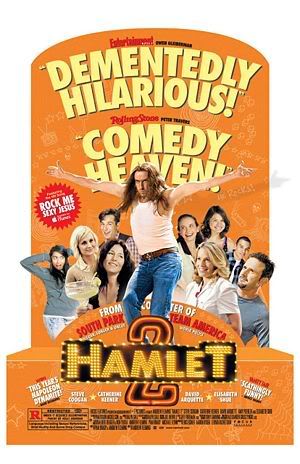
Hamlet 2


There's nothing out there at this moment that parallels the absolute ridiculousness of Hamlet 2 (except maybe Animal House, a landmark work of comedic genius). It's so over-the-top in such an understated way that many of the giggles come from being discomfited and stunned by the outrageously embarrassing, ludicrous, hammy, and offensive behavior of the main character, Dana Marschz, played by Steve Coogan.

Dana is a failed TV-commercial-actor-turned-drama-teacher in the city "where dreams go to die" of Tucson, Arizona. He only stages play adaptations of popular Hollywood movies, however, and he only has two students, the overtly gay Rand (Skylar Astin) who is in denial abous his sexuality, and the bright and bubbly Epiphany (Phoebe Strole) who "gets nervous around ethnics." When the school district cuts all electives but drama, all the "ethnics" Epiphany is so nervous about come to drama, and the movie goes in the typical direction of a teacher having to show love and compassion to "ghetto" kids to get them away from drugs/crime/pregnancy/etc.

And yet the movie itself is poking fun at movies like Freedom Writers and less esteemed movies of its ilk. Dana proves to be the worst teacher ever, cursing like a sailor at his class to make them listen to him and then demonstrating his blood-curdlingly awful acting skills. Epiphany's "understanding" of her "ethnic" classmates is so overdone that she begins to act like a poverty-ridden ghetto teenager, sprinkling words like "homie" and "vato" throughout her vocabulary in a hammed-up attempt at a Mexican accent, though she is clearly from a white upper-middle class family. In fact, many of the Mexican-American kids are not poor; when the star of the show Octavio declares that his parents have objections to the show, Dana marches off to have a poignant heart-to-heart with Octavio's (Joseph Julian Soria) ignorant, poor Mexican parents.

In an especially brilliant scene, Dana begins the conversation with, "You can't let your ethnic narrow-mindedness stop your son from thriving in our culture." Once you get over the shock and horror of this line, you can begin to appreciate what happens next.
Octavio's father then goes on to say in impeccable English that he has published nine novels and has a PhD in literature; Octavio's mother is a painter with an exhibit at the Guggenheim. Octavio has a 3.9 GPA and is going to Brown.
Dana then begs for help for his own work, especially the original play he has written and his drama class performing.

Oh, wait, did I not get to the play yet? It's a sequel to Hamlet, except it's really just Hamlet rewritten with a time machine so that Hamlet can go back in time to save Gertrude and Ophelia (with the help of, who else?, Jesus).

In fact, Dana's wife Brie (Catherine Keener) reads the opening lines for us in the first draft of his original work:
"'The time machine door opens revealing Hamlet, Gertrude, Palonius, and Hilary Clinton having what appears to be group sex,'" to which Dana responds,"That's about my troubled relationship with my father."

Trouble ensues, however, when the principal of the school reads the play and deems it too pornographic and offensive to perform. But luck is on Dana's side! Though his wife is leaving him for their pathologically boring (but fertile-which Dana is not) boarder, Gary (David Arquette), one of Dana's junkie students has a friend whose meth lab just burned down, and it turns out it's the perfect place to host the show.

Wirework is provided by a backyard start-up business, two guys who have no idea what they're doing and smash mute student Yolanda into a wall during the first trial. But by the time of the show, the wirework is good enough for Laertes and Hamlet's mid-air light saber battle to be a hit.

Meanwhile, Dana is becoming a local celebrity, and when people try to censor his work Ultimate Bitch-Lawyer Cricket Feldstein (Amy Poehler) comes to the rescue to take this civil liberties case to the national level.

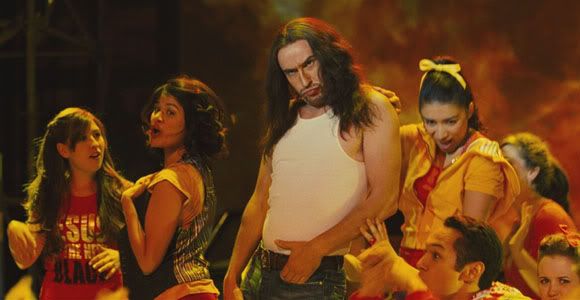
The play starts with an introspective musical number, complete with blue lighting and pensive acting, entitled, "Raped in the Face." Laertes is featured in a number of scenes looking decidedly gay, first in a cowboy outfit and then as a 50's greaser during the "Rock Me Sexy Jesus" number.

If you're going to watch for anything, at least watch for the "Rock Me Sexy Jesus" musical highlight.


Meanwhile, there's rioting outside, and when Octavio points out that it's intermission, Dana replies, "We can't have intermission now, the Fire Department's trying to evacuate the building."

Eventually, Dana ends up a world-renowned director and his play goes on broadway with the original cast.

It's a delightfully horrifying film for all the right reasons-it appears to take itself seriously and the situations are presented so pragmatically by Dana that it takes you a moment to stop and think about the layers of satire and not-very-plausible things going on; and when you finally do realize the utter ridiculousness of it all, your mouth will be hanging in delicious shock all the way to the floor.

-elln

Tuesday, March 17, 2009

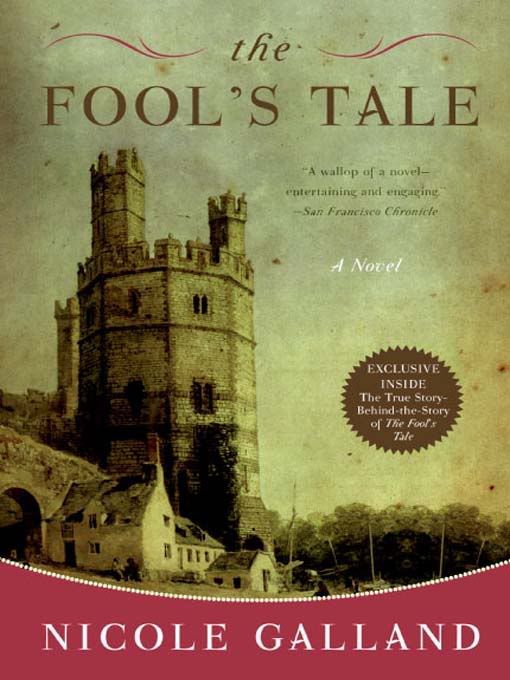
Nicole Galland's THE FOOL'S TALE


Apparently Nicole Galland is "an award-winning screenwriter" so I'm assuming she writes her screenplays under a pseudonym because I've looked for her everywhere.

Anyway, The Fool's Tale is her first novel; I picked it up on Martha's Vineyard, where she's a native, a couple years ago when I was feeling bored. I didn't expect to be impressed with it.

...and then I stayed up until three in the morning to finish the damn thing. It's a hefty size, too, an intimidating 500+ page book with small font. The writing manages to be descriptive and a bit lengthy, but still exciting. Galland stresses in an afterward that while some characters and events are based in history, she has taken many liberties with people and places and that this is not a historically accurate novel.

The story revolves around a small Welsh kingdom in the 1100's and the deadly politics involved in keeping it afloat. Maelgwyn ap Cadwallon, nicknamed Noble, is the king of the small but relatively secure Maelienydd. His best friend is an orphan named Gwirion, who was raised beside him and has a quick wit and endless nose for trouble. Gwirion is the court's fool and harpist, and gets away with murder because the king will never punish him; Gwirion's pranks and tomfoolery make him the court's darling, and the king confides his darkest secrets in Gwirion, who saved the king's life when they were children.

Then, in an attempt to secure one of his borders, Noble marries Isabel Mortimer. Isabel proves to be intelligent, cold, and uninterested in a Welsh lifestyle, a lifestyle she considers to be distatseful and primitive. Thus ensues the tortorous relationship Isabel shares with her new husband; sometimes they are able to get along, and she enjoys his sexual attentions; however he does not love her, she does not love him, and they often argue about her status or his various affairs. Isabel and Gwirion also abhor each other, and compete for the king's attention. Isabel doesn't feel any more at home after the king makes it quite clear that Isabel will never be as important as Gwirion, the fool, is.

Slowly, a change comes about as Isabel and Gwirion make a truce after months of discord. Isabel begins to embrace the Welsh lifestyle, and grudgingly earns the admiration and love of her people. However, she is unable to produce a child, and after a poisoning causes her to miscarry her first child, she is afraid she is barren. As her uncle continually betrays Noble, Noble begins to find that his marriage to Isabel was useless. As Isabel is becoming accustomed to her life as Queen, Noble faces increasing problems with his kingdom; the English on one border continually pose a threat, and another Welsh lord by the name of Llewelyn is a rising star in Wales. We are treated to some devious political thinking and machinations. While Isabel is coming out of her shell, Noble is sinking deeper and deeper into a twisted immorality which he justifies with his charge of preservation of his kingdom.

Thus it is that, when Noble is away fighting a war, Llewelyn's men come to claim the castle, and Gwirion and Isabel are locked up together. They realize that after months of fighting, they are no longer enemies--they have a deep bond in that both are dependent on the king's whim, and are utterly powerless. For Isabel, the law and society bind her to Noble; Gwirion knows that if he tried to leave Noble, he would be hunted to the ends of the earth. When Gwirion finally sees Isabel without her wimple, or head covering, he's shocked at how beautiful she is. Their illicit affair, one of not just lust but of true intimacy, something neither has known, begins.

Galland weaves these three characters so tightly together, and creates the most awkward and horrifying experiences and close calls for two lovers trying to hide their affair, that the circumstances are literally squirm-worthy. Despite the dense text, each page is suspense-ridden as we race towards an unknown conclusion. The affair itself comes with a wealth of complications; while Gwirion and Isabel love each other truly and deeply, their obligations to Noble, who is sinking further and further into depression as he watches his kingdom fall, leave them guilt-ridden. Gwirion being loved for himself, truly himself, brings about his maturation as he gropes for the one thing Noble's never given him- dignity. Noble has never allowed Gwirion to fall in love, because Noble will not allow a woman to come between them. Noble himself is half-insane by the end of the novel, revealing that he only allowed the affair to continue because he wanted to observe two of the most honest people he knows trying to be dishonest.

The ending of the novel is shocking, but I won't reveal more than that. Noble is truly a beastly creation, yet he deserves some sympathy for his inability to love romantically, and for his ability to love his one true friend only in a demented way. No one is blameless at the novel's close, and yet each character is profoundly understandable, sympathetic, and full of surprises. That is the true triumph of Galland's novel; how intewoven the fates' of these three fully-fleshed characters are, and the powerful things she chooses to do with them.

-elln

Monday, March 16, 2009

Elln's Top Ten Songs for March '09


So since I buy music like an addict, I decided to do my top ten of every month, which will probably be an eclectic compilation of everything indie, alternative, electronic, etc. The picture I choose will be of my favorite cover of all the selections.


1. "How Soon Is Now?"/The Smiths: whoa, poetry much? I can understand now why they were so revolutionary. The Smiths took melancholic, poetic, and deep and meaningful lyrics and made them accessible and (marginally) commercial and oddly satisfying. Honestly, they're so famous I feel stupid saying anything else.

2. "Float On"/Modest Mouse: Interestingly, guitarist Marr of the Smiths guested We Were Dead Before the Ship Even Sank, which probably explains the best part of the song: the freakin' guitar. Just listen to that thing, it's so addictive and laid-back yet amazing at the same time. Coupled with the lyrics and unmistakable vocals by Isaac Brock, it's one of the catchiest things I've heard all year. Seriously, I don't know why I was so resistant to Modest Mouse for so long.

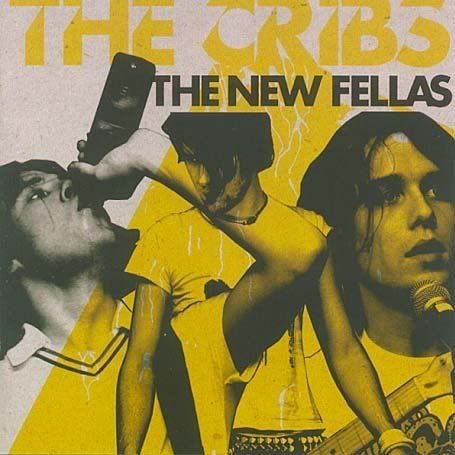
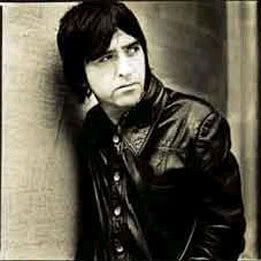
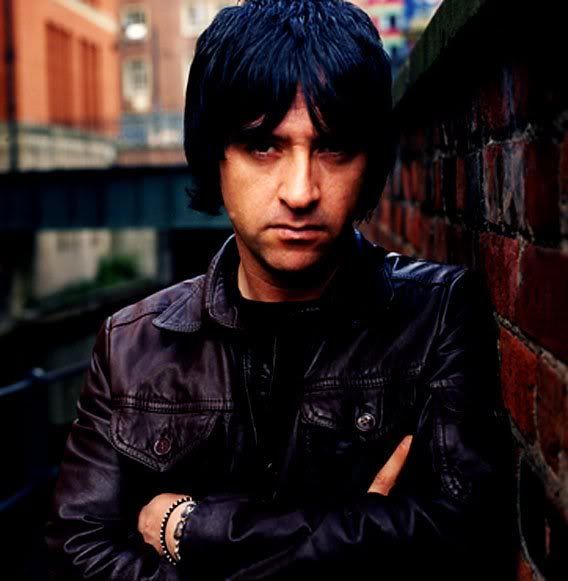
3. "We Can No Longer Cheat You"/The Cribs: Wait, Johnny Marr's in The Cribs, too? He's everywhere, he's like God, I swear I didn't know Marr was clairvoyant and all-powerful until I started this review.

Okay, it's now time to acknowledge Johnny Marr's Omnipotence.


Obviously my personal preference becomes obvious when I pick three random bands and they all have a guitarist in common. Anyway, onto the song.

50% of the time, The Cribs sound like Franz Ferdinand-wannabes, and the other 50% they strike it rich with a nice sound that lands between lush and tight garage rock. They have respectable, catchy tunes without being meaningless (Franz) or deep and pretentiously apathetic (The Strokes). I particularly enjoy the tight harmonies of the chorus, and the often-trod but still compelling subject matter. Really, just a good solid melody.


4. "Do the Right Thing"/The Dudes: What a heart-felt little gem; I must say I hadn't heard of the The Dudes before now so I don't have a wide frame of reference, but this is a smart piece of indie rock infused with pop sensibility. It really shines on the production end, and the lyrics are endearing and smart. Also gotta hand it to Dan Vacon for having a truly wonderful voice; you can hear him pushing himself, especially on the chorus, and yet there's no breaking and it sounds smooth as honey.

And how can you not love these purely slam opening lines?

my bedroom's worse than the Catholic Church, I let anyone in
and now my carnal sins have gotten to be so boring.
my heart's wide open, I sure was hoping you could close it down,
now it seems I'm finding out that loving you girl can be so frightening,
you strike me, like gas and lightning, love me, don't just spend the night,
you can count on me to do the right thing
You steal my nerve and you strike me
Love like lightning


5. "Northwestern Girls"/Say Hi: Well, after a disappointing name change, Say Hi to Your Mom has matured significantly since I listened to '06's Impeccable Blahs. That EP suffered from lyrical content (it was basically all very creepy songs about vampires), and I'm glad to say that if, at least not terribly sophisticated, "Northern Girls" is at least about a neutral and tolerable subject (that is, the female gender in reference to geographic positions, ala Beach Boys). It's catchy, low-key indie with appropriately wounded lyrics and a pounding drum and bassline; they're busy finding their sound, and making good progress along the way (I haven't had a chance to listen to Oohs & Ahhs yet). One thing they do need to learn is how to let the guitar rip; the last thirty seconds of the song have had such a buildup, and then they rely on percussion and bass and it doesn't do their vision justice, I can tell. I'm looking forward to how Say Hi (LAME name change) is going to mature.

6. "About to Walk"/Throw Me the Statue-Throw Me the Statue has certainly grabbed attention with Moonbeams; they're mainly impressive because of such a wide range of instruments and experimental sounds, put together into melodies that are both aesthetically pleasing and catchy. It's no wonder, then that they've opened for Cake, a band both plagued and renowned for a funkiness that never seems to evolve at all. Throw Me the Statue has already proved their worth beyond a band like Cake by demonstrating a creative versatility, poetic lyracism, and talent for mixed melodies.

Oh yeah, the song? I enjoy the ukulele-like sound that plays. I said everything else up ^ there

7. "No You Girls"/Franz Ferdinand: Yay, another solid effort from my favorite party-boy bisexual junkies! Franz Ferdinand just knows how to rock them melodies; if I ever hear any type of serious effort from them on the part of lyrics, I'll fall over in surprise, and I probably won't be impressed. The whole point of Franz is utter cockiness combined with a tinge of insecurity- and of course where would they be without their incessant party-worshipping?. It's the same buzzy guitars, the late nights where you forget yourself and then wake up and feel your youth sapping away and then go out to party again to forget that fact, and jarring and clever tempo-changes we've come to know and love. "No You Girls" is a seriously catchy effort from their newest album.

8. "Elevation"/Television: More early punk movement, except listening to this song is like listening to a more sophisticated, decommercialized version of the Eagles. Reminsicent of Echo & the Bunnymen, "Elevation" is a haunting effort in guitar line melody changes, and for the better. For all that the song seems to lack a pattern, it's less punk more rock as the guitars are skillfully layered on, and it's captivating. There's no shiny, spiffy production- this sound is raw and satisfying.

9. "Summer Romance"/The Redwalls: Guilty pleasure of the month, this song's simplicity reeled me in. I'm a sucker for well-done romantic confessions, and that's exactly what cutie-pie Logan Baren does as he yells out, "Darling, please don't let me say goodbye!"

Yes, they're shameless whores for '60's and '70's rock, but hey they started as a cover band of that exact time period (as British invasion specialists). Just because they're recycled material doesn't mean they're not good. I like recycling if it's done with some talent. Besides, I have a feeling that they're branching out slowly, slowly into their own territory.

10. "Confines of Gravity"/PlayRadioPlay!: Yup, another semi-guilty pleasure. But it's been a while since I've heard such a good drug song (and such an obvious one-jeez, it practically hammers you over the head), and in this case the analogy actually works and turns out to be sufficiently disorienting and powerful at the same time.

I wanna be an astronaut and get high
break the barriers of sound into the sky
Just wanna be free
from the confines of gravity


Daniel Hunter's voice walks the fine line between soothing and grating, but I think it comes out for the better, especially layered over his synth/electronic beats that are both inviting and clever. There's talent in this simplicity, and the basic message comes through unhindered and with clarity.


Well, that's it. Have a good month. And remember:

JOHNNY MARR IS WATCHING YOU

-elln